Exclusive: This article is part of our AI Security & Privacy Knowledge Hub , the central vault for elite analysis on AI security risks and data breaches.
Date: november 20, 2025
Author Attribution: Authored by Royal Digital Empire's Defense Tech Research Team, comprising cybersecurity analysts specializing in AI risks and geopolitical strategists, this piece critically examines the geopolitical implications of AI, drawing on insights from defense policy, cybersecurity trends, and ethical AI frameworks.
Editorial Policy: Royal Digital Empire is committed to accurate, evidence-based reporting on critical technology topics. This article has been thoroughly fact-checked and reviewed by subject matter experts to ensure its alignment with current research and policy discussions in AI and defense.
Introduction:
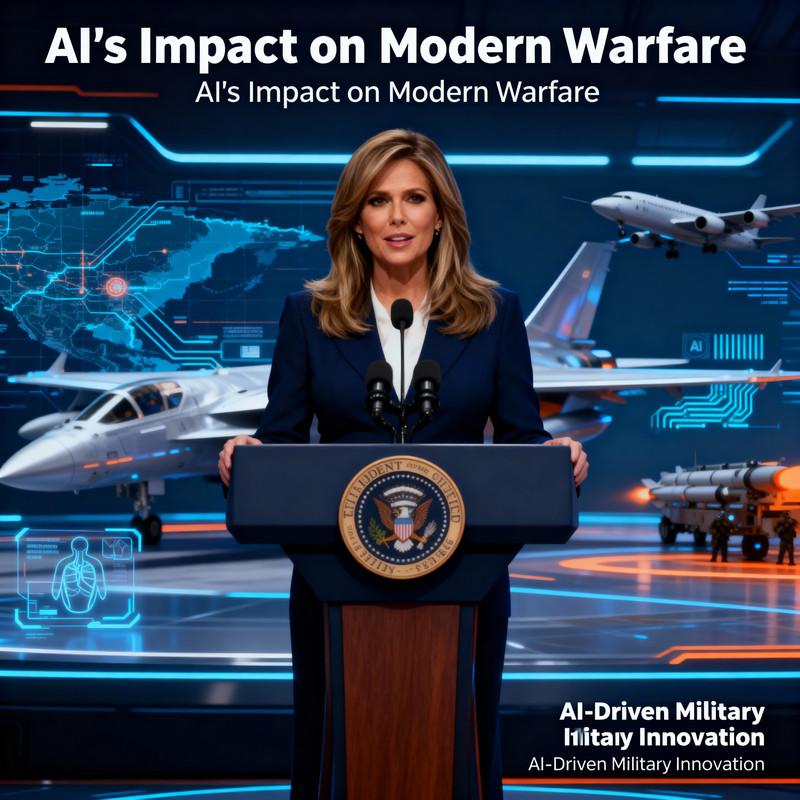
The intersection of artificial intelligence and military strategy is redefining conflict. Melania Trump's statement that AI will alter warfare as profoundly as nuclear weapons highlights this shift. This analysis explores AI in modern warfare, covering military applications, policy, and ethical dilemmas.
The Impact of Artificial Intelligence on Future Warfare
Melania Trump's warning aligns with analyses from organizations like the Center for a New American Security (CNAS) and U.S. Department of Defense AI strategies. AI represents a fundamental paradigm shift, enhancing decision-making, targeting, intelligence, and logistics, thus redefining military power. The race for AI dominance is a new frontier in national security. This transformative role of AI in military power is a key aspect of .
Real-World Military AI Applications: Drones, ISR, and Cyber Warfare
AI is actively deployed in military domains, enhancing capabilities from reconnaissance to logistics. The U.S. Department of Defense's "AI Strategy" (Defense.gov) details applications in predictive maintenance, logistics optimization, and battlefield awareness. AI improves ISR operations by processing vast data, identifying patterns. It is also critical in cyber warfare for threat detection and response. These advancements highlight AI's role in cyber defense, a topic further explored in .
Autonomous Drones and Robotics: AI's Role in Unmanned Systems
AI powers autonomous drones and robotic systems, enabling varying degrees of independence in navigation, target identification, and mission execution. The ethical implications of these systems are debated, especially concerning and lethal decision-making delegation.
Ethical AI in Warfare: Accountability, Bias, and Autonomous Weapons
The integration of AI into military systems raises critical ethical debates for YMYL topics. Concerns include accountability for AI-made strike decisions, especially with autonomous weapons. Bias in AI algorithms could lead to unintended casualties or discrimination. Lethal Autonomous Weapons Systems (LAWS), operating without human intervention, are highly contentious. Organizations like the United Nations Institute for Disarmament Research (UNIDIR) advocate for international treaties and regulatory frameworks.
Frequently Asked Questions (FAQ)
- What did Melania Trump say about AI and warfare? She stated AI will alter warfare as profoundly as nuclear weapons, emphasizing its role as a battlefield game-changer.
- How is AI currently used by militaries? AI powers autonomous drones, enhances ISR, optimizes logistics, and is critical in cyber warfare.
- Why are there ethical concerns about AI in warfare? Concerns include accountability, algorithmic bias, and autonomous weapons systems (LAWS).
- What is 'Winning the AI Race' in the context of defense? It's a U.S. strategic imperative to lead in AI technology for defense and geopolitical power.
- Will AI replace human soldiers on the battlefield? AI will augment and assist, potentially replacing some functions, but not entirely replace human soldiers; it will transform human involvement.
Conclusion
The transformation of warfare by AI is undeniable, as highlighted by Melania Trump's statements. From autonomous systems to cyber operations, the technological shift is profound, but it carries significant ethical responsibilities regarding accountability, bias, and autonomous weapons. As nations invest in military AI, global frameworks and ethical guidelines are urgently needed. Royal Digital Empire will continue to monitor these developments, providing insights into .
Disclaimer Refinement: Royal Digital Empire provides this article for informational purposes, synthesizing publicly available data and early independent analyses. We continually monitor the dynamic field of AI to bring you the most current and relevant developments.