Exclusive: This article is part of our AI Security & Privacy Knowledge Hub , the central vault for elite analysis on AI security risks and data breaches.
Top Technology Trends Reshaping 2026
2026 is not just another tech year—it marks a structural shift. Technology is no longer evolving in isolation. Artificial intelligence, automation, digital infrastructure, and sustainability are now deeply interconnected, reshaping economies, creativity, governance, and everyday life.
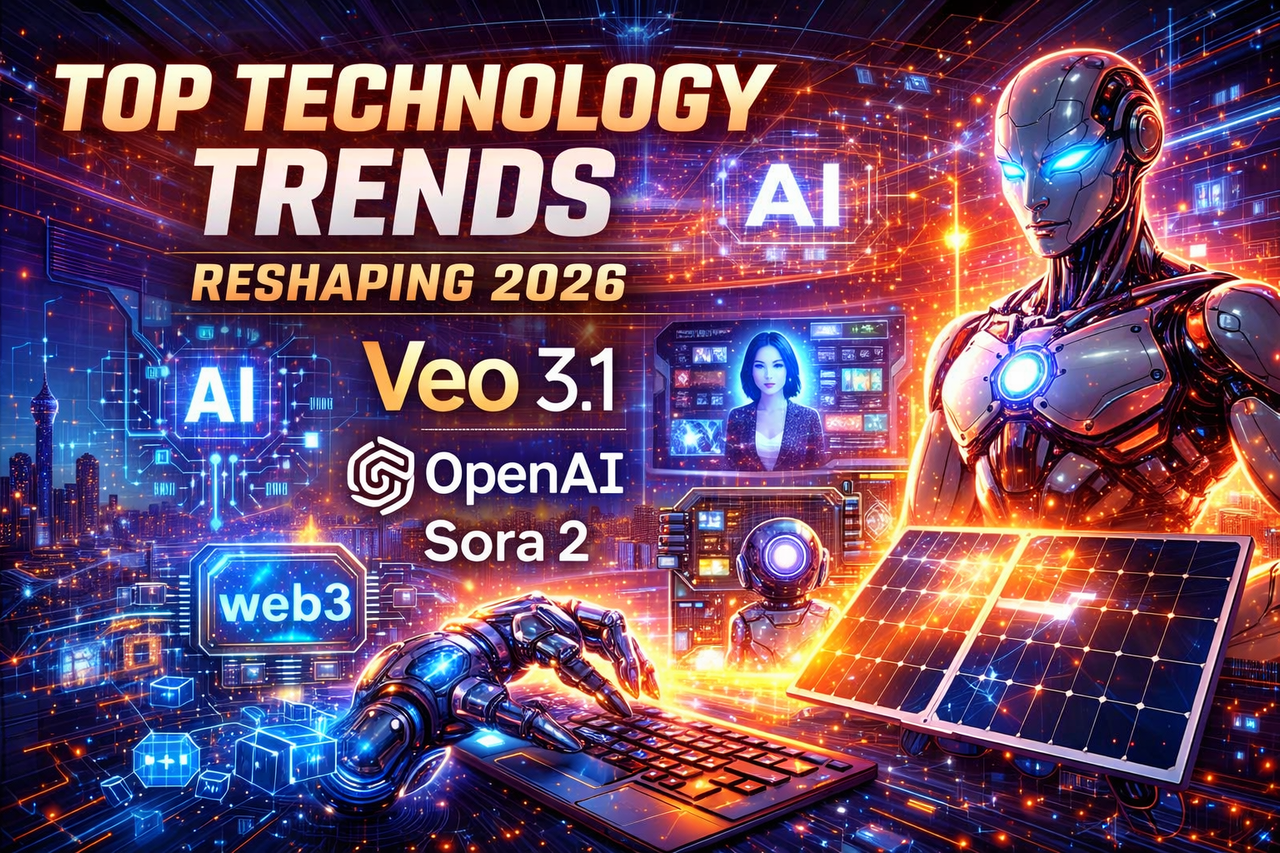
This guide explores the most important technology trends defining 2026, with a focus on ethical innovation, real-world adoption, and long-term impact.
1. Autonomous AI Agents Become Digital Co-Workers
In 2026, AI has moved beyond simple chatbots. Autonomous AI agents now plan, execute, and improve tasks with minimal human input.
- AI agents managing research, scheduling, and operations
- Multi-agent systems collaborating on complex goals
- Ethical guardrails ensuring transparency and control
Why it matters: AI is no longer just a tool—it is becoming a digital workforce that amplifies human capability rather than replacing it.
2. Generative Video & Media Explosion (Veo 3.1, Sora 2)
2026 is the year generative media goes mainstream. Tools like Veo 3.1 and OpenAI Sora 2 allow creators, educators, and businesses to generate cinematic-quality video from text, images, and structured prompts.
- AI-generated films, ads, and documentaries
- Rapid content localization across languages
- Ethical watermarking and AI content disclosure
Why it matters: Storytelling is no longer limited by production budgets—ideas become visuals instantly, democratizing media creation.
3. Digital Transformation Evolves into AI-First Infrastructure
By 2026, digital transformation means AI-first architecture. Organizations now design systems where AI is embedded at the core, not added later.
- AI-powered operating systems for enterprises
- Predictive cybersecurity and fraud prevention
- Real-time decision intelligence
Why it matters: Companies that fail to adopt AI-native systems risk becoming structurally uncompetitive.
4. Web3 Infrastructure Becomes Invisible but Essential
In 2026, Web3 is no longer hype—it is infrastructure. Blockchain operates quietly in the background, enabling trust, ownership, and verification.
- Decentralized identity and credentials
- Transparent supply chains
- Tokenized digital assets with real utility
Why it matters: Trust becomes programmable, reducing reliance on centralized intermediaries.
5. Sustainable & Responsible Computing Takes Center Stage
As AI scales, sustainability becomes non-negotiable. In 2026, innovation is measured not just by power—but by responsibility.
- Energy-efficient AI models
- Green data centers and carbon-aware computing
- Ethical AI governance and regulation
Why it matters: Long-term success belongs to technologies that respect both people and the planet.
Conclusion: The Future Is Ethical, Intelligent, and Human-Centered
The technologies reshaping 2026 are powerful—but power alone is not enough. The real winners will be those who deploy innovation responsibly, ethically, and inclusively.
AI, automation, generative media, and digital infrastructure are not replacing humanity—they are redefining what humanity can achieve.
Stay Ahead of the Curve
Follow our insights on AI, future technology, and digital transformation as we track the next phase of global innovation.


