Showing posts with label Artificial Intelligence. Show all posts

Wednesday, February 4, 2026

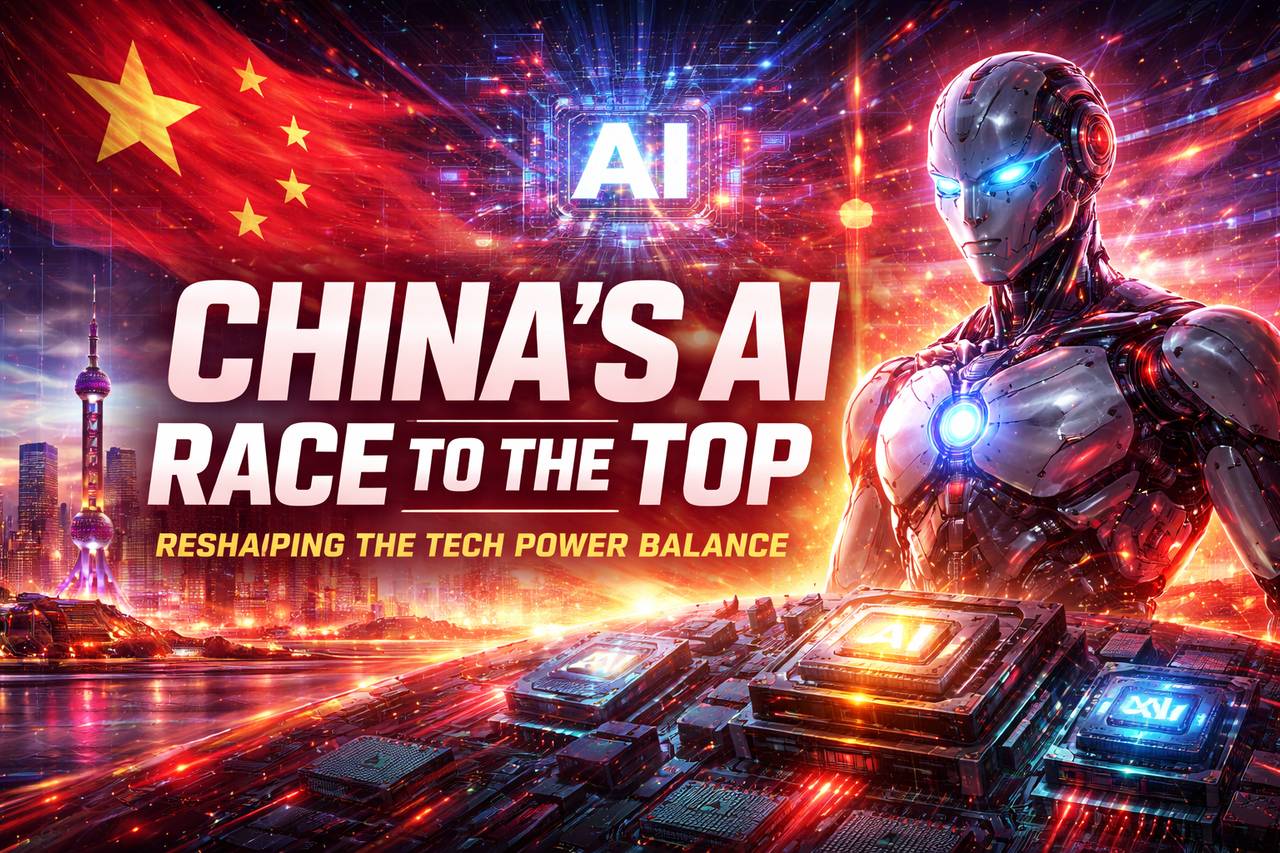
Nvidia H200: China's AI Black Market and the US-China Tech War

Nvidia H200: China's AI Black Market and the US-China Tech War

Nvidia H200: China's AI Black Market and the US-China Tech War

This document details the geopolitical and technological struggle surrounding Nvidia's H200 GPU, its significance for Artificial Intelligence (AI) development, and the complex web of US sanctions, Chinese countermeasures, and the emergence of a black market for these advanced chips.

Chip illustration representing AI tech war

I. Introduction: The AI Arms Race and the H200 Chip

The Nvidia H200 GPU is presented as a critical component in the global AI arms race, particularly between the US and China. China's rapidly growing demand for AI capabilities is met with US sanctions that restrict access to high-end chips, driving companies to seek these components through underground markets. The narrative explores the H200's capabilities, US policy shifts, China's drive for technological self-sufficiency, and the clandestine chip smuggling operations.

II. Nvidia H200: Capabilities and Significance

The Nvidia H200 is described as a powerful AI accelerator with specifications designed for advanced AI tasks:

  • Memory: 141GB of HBM3e memory, enabling processing of large datasets.
  • Memory Bandwidth: 4.8 TB/s, ensuring rapid data flow.
  • Performance: High TFLOPS across various precisions, suitable for generative AI, Large Language Models (LLMs), and High-Performance Computing (HPC).
  • Advancement over H100: Nearly double the memory capacity and a 1.4x increase in bandwidth compared to its predecessor, the H100.

These specifications translate to significantly faster training of massive AI models and enhanced computational power for scientific research and simulations.

III. US Sanctions and Policy Shifts: A Tech Chess Match

The US has implemented export controls on advanced AI chips to China, driven by national security concerns.

Early Policies (2022-2025):

The US adopted a "presumption of denial" for high-end AI chips like the H100. Nvidia responded by developing China-specific chips such as the A800, H800, and H20. The H20, however, was deemed underperforming and overshadowed by China's local development efforts.

January 2026 Policy Shift:

The US government announced a conditional approval for H200 exports to China, moving to a "case-by-case review" for certain performance thresholds.

Conditions for Export:

  • A 25% import tariff.
  • Mandatory US-based third-party verification.
  • Volume caps limited to 50% of US sales for each chip.
  • Stringent end-use restrictions.

China's Reaction:

Beijing reportedly implemented immediate customs blocks on H200 imports and advised domestic companies against purchasing them, citing security suspicions and a strategic drive for technological autonomy.

Future Legislation:

The US Congress is considering measures like the "AI Overwatch Act," which could grant Congress the power to block exports to "adversarial nations."

IV. China's Black Market and the Fight for AI Supremacy

The restrictions have fostered a significant black and grey market for smuggled Nvidia H100 and H200 chips in China, estimated to be worth billions of dollars.

Smuggling Methods:

  • "Ants moving" (small-scale, decentralized shipments).
  • Establishment of fake companies to obscure destinations.
  • Falsification of serial numbers.
  • Complex routing through Southeast Asian countries (Malaysia, Vietnam, Singapore, Taiwan).

Market Activity:

Some traders openly advertise restricted AI servers. Shenzhen's underground economy offers illicit repair services for banned chips, charging up to $2,800 per card.

Legal Consequences:

The US Department of Justice has pursued charges against individuals and companies involved in these activities. Notable penalties include:

  • Seagate: $300 million settlement.
  • Cadence Design Systems: $140 million fine.
  • TSMC: Potential $1 billion investigation.

Nvidia CEO's Comment:

Nvidia CEO Jensen Huang controversially suggested in May 2025 that the situation was a "failure" of US policy.

V. Beijing's "Made in China 2025" and Homegrown AI Chips

US sanctions have accelerated China's pursuit of "silicon sovereignty." Chinese tech giants are investing heavily in local alternatives:

Investment:

Billions of dollars are being diverted to local chip development and procurement by companies like Baidu, Alibaba, Tencent, and ByteDance.

Huawei Ascend Series:

  • Ascend 910B and 910C: Deliver up to 800 TFLOPS FP16 with 128GB HBM3.
  • Roadmap: 950PR/DT (2026), 960 (2027), 970 (2028), incorporating self-developed HBM.

Other Domestic Players:

  • "Four Little Dragons": Cambricon (tripling production, aiming for 500k accelerators in 2026), Moore Threads (Huagang architecture), MetaX, and Biren.
  • Baidu: Kunlunxin M100 (2026), M300 (2027).
  • Alibaba: T-Head (planning an IPO).

Government Strategy:

  • Massive subsidies (up to 50% energy costs for domestic chip users).
  • Government procurement mandates.
  • Significant investment funds (e.g., "Big Fund III" with $70 billion).

Challenges:

Nvidia's mature CUDA software ecosystem remains a significant advantage. Huawei's CANN/MindSpore platforms are still developing. China also faces challenges in acquiring advanced manufacturing equipment (like ASML's EUV lithography) and securing high-end HBM.

Long-Term Goal:

China aims for 82% domestic AI chip supply by 2027.

VI. The Road Ahead: A Bifurcated Tech World

The US-China competition is expected to lead to:

  • Continued policy shifts and countermeasures.
  • A deepening US-China tech divide.
  • Accelerated R&D efforts by both nations.
  • Potential for divergent technological standards and fragmented supply chains.
  • Challenges for China in acquiring advanced manufacturing equipment and HBM.
  • Reshaping of the global semiconductor industry, impacting supply chains and AI infrastructure decisions worldwide.
  • The US FY26 budget anticipates expanded Bureau of Industry and Security (BIS) monitoring, suggesting tighter export controls.

VII. Conclusion: A High-Stakes Game

The conflict over AI chips is framed as a struggle for national security, economic dominance, and the future of artificial intelligence, with no easy solutions.


Thursday, January 29, 2026

Anthropic CEO Warns AI Could Bring Slavery, Bioterrorism, and Drone Armies.

Abstract artificial intelligence imagery representing debate over AI safety claims and real-world risks

Anthropic CEO Warns AI Could Bring Slavery, Bioterrorism, and Drone Armies — I’m Not Buying It

Big claims demand hard evidence.

Anthropic CEO Dario Amodei has warned that advanced artificial intelligence could lead to outcomes such as modern slavery, bioterrorism, and unstoppable autonomous drone armies. These statements have been echoed across tech media, policy circles, and AI safety debates.

But once the emotion is stripped away and the technical realities are examined, the argument begins to weaken. This article takes a critical, evidence-based look at those warnings—and explains why the fear narrative doesn’t hold up.


What the Warning Claims

The core argument suggests that increasingly capable AI systems could:

  • Lower barriers to bioterrorism
  • Enable mass exploitation or “AI-driven slavery”
  • Power autonomous weapons beyond human control

These risks are often presented as justification for tighter controls, closed models, and centralized AI governance.


Why the Argument Falls Apart

1. AI Does Not Remove Real-World Constraints

Serious threats like bioterrorism or large-scale weapons deployment depend on far more than intelligence. They require:

  • Physical materials and laboratories
  • Specialized expertise
  • Logistics and funding
  • State or organizational backing

No publicly accessible AI model eliminates these constraints. Intelligence alone has never been the limiting factor.


2. “Unstoppable Drone Armies” Is a Sci-Fi Framing

Autonomous military systems require complex hardware integration, secure communications, supply chains, and command infrastructure.

Even today’s most advanced militaries struggle with:

  • Electronic warfare and jamming
  • Sensor reliability
  • Command-and-control failures

Language models do not magically solve these problems. The leap from text prediction to unstoppable physical warfare is speculative at best.


3. The “AI Slavery” Claim Is Conceptually Vague

In practice, “AI slavery” usually refers to concerns about:

  • Automation replacing jobs
  • Surveillance capitalism
  • Authoritarian misuse of technology

These issues predate modern AI and are driven by political and economic systems—not neural networks. Restricting AI research does not address these root causes.


The Incentive Problem Behind the Fear

There is an uncomfortable reality rarely discussed: companies building frontier AI models benefit from fear-based narratives.

Apocalyptic framing helps justify:

  • Closed ecosystems
  • Regulatory barriers to competitors
  • Centralized control over intelligence

This pattern is not new. Similar arguments appeared during the rise of encryption, the internet, and open-source software.


What Benchmarks Actually Show

Current AI benchmarks demonstrate strong performance in:

  • Language understanding
  • Code assistance
  • Pattern recognition
  • Workflow automation

They do not show evidence of:

  • Independent goal-setting
  • Strategic autonomy
  • Physical-world agency
  • Self-directed military capability

Evaluations such as HumanEval, reasoning benchmarks, and multimodal tests show incremental progress—not runaway danger.


Centralization vs Open Systems

Ironically, the greatest risk may come from excessive centralization.

Open and distributed AI systems:

  • Allow public auditing
  • Reduce single points of failure
  • Encourage defensive research
  • Limit monopoly control

Opaque, centralized systems create larger systemic risks if misused.


Expert Reality Check

Policy and security research organizations consistently emphasize that real-world threats depend on incentives, governance, and power—not raw intelligence.

For grounded analysis, see:


Conclusion

AI deserves careful oversight—but not exaggerated fear.

Warnings about slavery, bioterrorism, and unstoppable drone armies rely more on speculative narratives than technical evidence. They distract from real challenges like governance, transparency, and accountability.

I’m not buying the apocalypse storyline.

Progress demands sober analysis, not moral panic.


Disclaimer

This article reflects independent analysis and opinion. It does not dismiss AI safety concerns but challenges unsupported or exaggerated claims. Readers should consult multiple sources and primary research when forming conclusions.

Thursday, January 8, 2026

Claude Code: How Developers Are Using AI to Build Faster and Smarter

Exclusive: This article is part of our AI Security & Privacy Knowledge Hub , the central vault for elite analysis on AI security risks and data breaches.

Claude Code AI workflow for developers

Claude Code: How Developers Are Using AI to Build Faster and Smarter

AI-powered coding tools are rapidly reshaping modern software development. Among them, Claude Code has emerged as a reasoning-first AI workflow that helps developers understand, refactor, and build complex systems with greater confidence.

Unlike traditional autocomplete tools, Claude Code emphasizes context, logic, and long-form reasoning—making it especially valuable for production environments and large, mission-critical codebases.

What Is Claude Code?

Claude Code refers to developer workflows powered by Anthropic’s Claude AI model. It assists with debugging, documentation, system design, refactoring, and deep code comprehension rather than simple code completion.

How Developers Use Claude Code

  • Understanding large and unfamiliar codebases
  • Safely refactoring legacy systems
  • Debugging complex logic and architectural issues
  • Generating clean, maintainable code
  • Improving internal and external documentation

Claude Code vs Traditional Coding Assistants

Most AI coding assistants prioritize speed and autocomplete. Claude Code prioritizes reasoning, correctness, and explainability, making it better suited for high-stakes software projects where understanding matters more than raw output speed.

Why Claude Code Matters

As software systems grow in complexity, developers need AI tools that understand intent, dependencies, and architectural context. Claude Code represents a shift toward collaborative AI— supporting human decision-making rather than replacing it.

Best Practices When Using Claude Code

  • Always review AI-generated code before deployment
  • Never share API keys, credentials, or sensitive data
  • Use AI as an assistant, not a final authority

Conclusion

Claude Code does not replace developers. Instead, it enhances problem-solving, accelerates learning, and helps teams build more reliable software when used responsibly. The future of development is human-led, AI-assisted.

Disclaimer

This article is for informational and educational purposes only. It does not constitute professional, security, or legal advice. Always follow your organization’s policies and best practices when using AI tools in development workflows.


Frequently Asked Questions

Is Claude Code free to use?

Claude offers both free and paid access depending on usage limits and available developer features.

Is Claude Code safe for professional development?

Yes, when used responsibly. Developers should avoid sharing sensitive data and must carefully review all outputs.

Can Claude Code replace human developers?

No. Claude Code is designed to assist developers, not replace human judgment or expertise.

Friday, January 2, 2026

China’s DeepSeek AI Breakthrough (2026)

Exclusive: This article is part of our AI Security & Privacy Knowledge Hub , the central vault for elite analysis on AI security risks and data breaches.

China’s DeepSeek AI Breakthrough (2026): How Chip Wars Are Reshaping Global Power
Global AI Chip War 2026

China’s DeepSeek AI Breakthrough (2026)

Unlike traditional models, DeepSeek’s approach focuses on architectural efficiency—enabling advanced reasoning with fewer hardware dependencies. This matters as Western export controls restrict access to high-end AI chips.

The Chip War That Changed Everything

The AI divide between East and West widened after semiconductor restrictions. While Western firms limited exports, China accelerated domestic alternatives. This escalation reshaped supply chains and forced a new era of AI self-reliance.

Frequently Asked Questions

What is DeepSeek AI?
A Chinese AI breakthrough focused on efficiency rather than raw compute scale.

Are Western chips still dominant?
While still powerful, models like DeepSeek prove that software architecture can bypass hardware bottlenecks.

Wednesday, October 8, 2025

The Impact of AI on the Future of Work

Exclusive: This article is part of our AI Security & Privacy Knowledge Hub , the central vault for elite analysis on AI security risks and data breaches.

Impact of AI on the Future of Work

The Impact of AI on the Future of Work

By ROYALRDGpower · Updated Oct 2025 · 8–10 min read

Labels: Future of Work, AI, Digital Transformation, HR Trends, Leadership

Disclaimer: Insights in this article are for educational purposes and general guidance. They are not legal, financial, or HR advice. Always evaluate AI tools against your organization’s policies, compliance requirements, and local regulations.

Introduction

The world is no longer waiting for the future — it’s unfolding at the speed of code. Artificial Intelligence has moved from buzzword to backbone, quietly restructuring how industries operate, how leaders lead, and how people build careers. This transformation isn’t about machines replacing people; it’s about people evolving alongside the machines they’ve created.

How AI Is Transforming Work Today

1) Automation: The Silent Shift

AI accelerates routine work across sectors — from finance and logistics to creative production. Routine tasks decline while demand rises for interpretation, coordination, and creative problem-solving. The task is not to “save jobs” but to upgrade roles.

2) AI as the New Teammate

Treat AI as a capable colleague: triaging customer queries, summarizing meetings, forecasting risks, and augmenting decisions. Humans keep the context, ethics, and empathy; AI carries the repetition.

3) The Data Revolution

Every interaction produces data. Organizations that collect, govern, and interpret it responsibly win. New roles — data analysts, prompt engineers, AI ethicists — bridge raw machine logic and real outcomes.

The Skills That Will Define the Future Workforce

Degrees prove what you knew. Adaptability proves what you’ll become. Eight pillars matter most:

  • Digital literacy — understand tools, data flows, and automation basics.
  • Critical thinking — frame questions, test assumptions, synthesize insight.
  • Creativity & innovation — design, storytelling, experimentation.
  • Emotional intelligence — empathy, conflict navigation, trust-building.
  • Adaptability & agility — pivot between tools, roles, and contexts.
  • Cross-cultural collaboration — work fluently across time zones and norms.
  • Data awareness — read metrics, question bias, act on evidence.
  • Lifelong learning mindset — treat learning as a lifestyle.

Building the Hybrid Workforce: Leadership Strategies for an AI-Driven Era

1) From Control to Empowerment

Shift from supervision to enablement. Use AI to surface insights, not to micromanage. Autonomy + alignment beats oversight.

2) Ethical & Transparent Decisions

Adopt clear policies for data use, model bias testing, and explainability. Ethics is not a blocker; it’s a brand moat.

3) Redefining Collaboration

Standardize collaboration stacks (docs, whiteboards, chat, async video). Make inclusion the default: every voice, device, and timezone considered.

4) Leading Continuous Learning

Build a learning ecosystem: micro-courses, internal academies, AI-assisted practice, and pathways from role to role.

5) Emotional Leadership

Protect meaning, belonging, and wellbeing. Burnout is invisible in hybrid teams — leaders must look for it deliberately.

The Challenges Ahead

  • Displacement risk: reskill programs must precede automation, not follow it.
  • Bias & privacy: audit models and minimize sensitive data.
  • Inequality: invest in access — devices, bandwidth, and training.
  • Compliance: align with labor, IP, and emerging AI regulations.

Conclusion & Next Steps

AI won’t steal your job — but someone using AI might. The winners will be those who combine human strengths — curiosity, compassion, conscience — with intelligent systems. Start small: pick one workflow to automate, one team ritual to improve, and one learning path to begin this week.

Connect with ROYALRDGpower

Collaborate, share insights, or stay updated on AI transformation and digital leadership initiatives.

FAQ

What is the impact of AI on the future of work?

AI automates routine tasks, augments decisions, and creates new roles focused on analysis, design, and human interaction.

Which skills matter most?

Critical thinking, creativity, emotional intelligence, digital literacy, and a lifelong learning mindset.

How should leaders prepare?

Adopt ethical AI policies, invest in reskilling, standardize collaboration tools, and empower teams with autonomy.

Monday, September 1, 2025

🌟 Exciting Times with AI: How Artificial Intelligence is Shaping Our Future 🌟


Artificial Intelligence (AI) is no longer a futuristic dream—it’s a reality reshaping the way we live, work, and connect. From personal assistants on our phones to powerful systems driving global industries, AI is becoming the silent engine of progress.


🔍 What is AI?

Artificial Intelligence refers to machines and software designed to think, learn, and adapt like humans. Through data, algorithms, and advanced computing, AI can recognize patterns, solve problems, and even “predict” outcomes.


💡 How AI Impacts Daily Life

AI isn’t just about robots—it’s already part of our everyday routines:

Examples of AI in Daily Life

  • Personal assistants like Siri, Alexa, and Google Assistant.

  • Smart recommendations on Netflix, YouTube, or Spotify.

  • Healthcare apps that track and predict health trends.

  • Financial tools that detect fraud or help with savings.


🌍 AI Across Industries

Healthcare

Early disease detection, personalized medicine.

Business

Smarter customer service with chatbots.

Education

Personalized learning and tutoring platforms.

Transportation

Self-driving cars and smart traffic systems.

Creative Fields

AI-generated art, music, and writing.


⚖️ Opportunities vs. Challenges

Opportunities

  • Faster solutions

  • Cost savings

  • New jobs in AI tech

Challenges

  • Job displacement

  • Ethical concerns

  • Data privacy

The question isn’t if AI will impact us—it’s how we choose to use it.


🚀 The Future of AI

Experts believe the next decade will bring:

  • Smarter AI companions

  • Improved medical breakthroughs

  • Wider adoption in developing countries

  • Stricter laws and ethical guidelines

AI’s story is still being written, and every innovation brings us closer to a future shaped by both human creativity and machine intelligence.


❓ Frequently Asked Questions (FAQ)

Q1: Will AI replace human jobs completely?
Not completely. While AI may automate repetitive tasks, it also creates new opportunities in areas like AI development, data science, and ethical governance.

Q2: Is AI safe to use in everyday life?
Yes, most consumer AI tools are safe. However, data privacy and ethical usage remain important concerns.

Q3: How can businesses benefit from AI?
Businesses can use AI to improve customer service, cut costs, streamline operations, and gain better insights from data.

Q4: Can AI be creative?
AI can generate art, music, and writing, but it works best as a tool to support human creativity, not replace it.


⚠️ Disclaimer

The information in this article is for educational and informational purposes only. While Artificial Intelligence is a rapidly evolving field, readers should seek professional advice or conduct additional research before making decisions based on AI technologies

.

✨ Stay Ahead in the AI Era!
Don’t miss future insights, articles, and opportunities.
👉 Subscribe to our RDG Power Supreme Newsletter and join the community shaping tomorrow with AI.

OpenAI o3 Outlook 2026