Showing posts with label Elite Hustle Vault Central. Show all posts

Wednesday, November 12, 2025

Baidu’s latest open-source multimodal AI model claims to outperform GPT-5 and Gemini.

Exclusive: This article is part of our AI Security & Privacy Knowledge Hub , the central vault for elite analysis on AI security risks and data breaches.
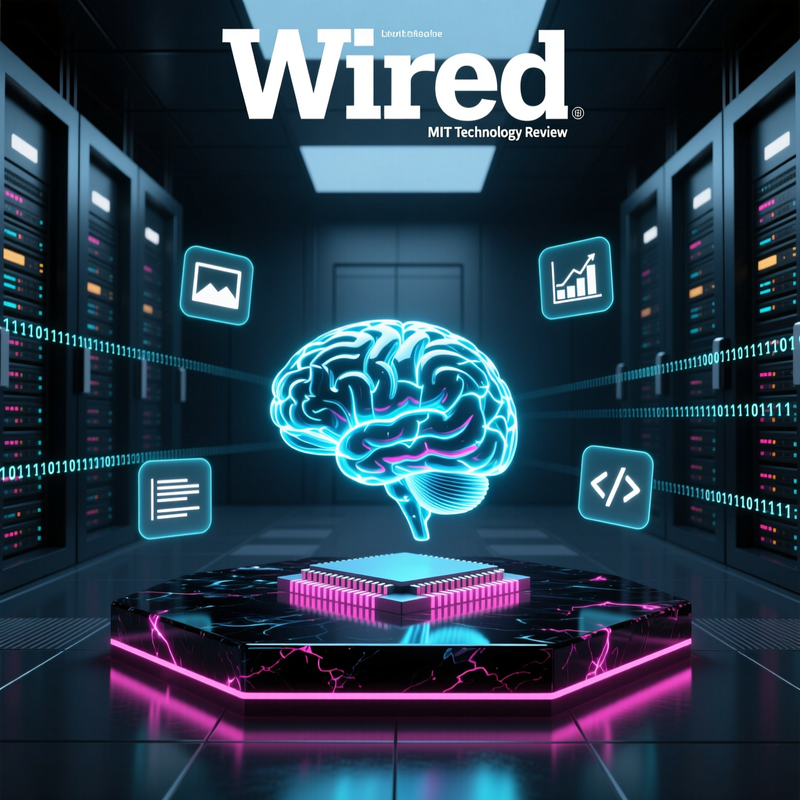
Baidu’s Open-Source Multimodal AI Push: Can It Really Beat GPT-5 and Gemini?
Baidu Open Source AI Banner

Baidu’s Open-Source Multimodal AI Push: Can It Really Beat GPT-5 and Gemini?

Date: January 18, 2026

Author Attribution: This analysis was prepared by Royal Digital Empire's AI Research Team, drawing upon years of experience tracking advancements in AI security, large language models, and digital innovation. Our commitment is to provide well-researched, unbiased insights into the evolving AI landscape.

Introduction:
Baidu's ERNIE Multimodal v4 is presented as a significant open-source competitor to OpenAI's GPT-5 and Google's Gemini, signaling a strategic shift towards democratizing advanced AI capabilities and reshaping industry competition. This article explores ERNIE Multimodal v4's specifics, performance claims, and implications.

Baidu's Open-Source AI Strategy: Global Engagement and Transparency

Baidu's open-sourcing of ERNIE Multimodal v4 aims to accelerate innovation, attract a wider developer community, and establish a global footprint. This contrasts with closed-source models and fosters transparency. Baidu's official announcement emphasized "shared progress" on its Baidu AI Open Platform. This move could position Baidu as a major contributor to open-source multimodal AI, challenging Western tech giants. For context on open-source models, explore .

Democratizing Advanced AI: The Philosophy Behind Baidu's Open-Source Move

The philosophy extends beyond code-sharing, reflecting a belief that democratizing AI models leads to faster advancements and diverse applications. This approach invites global collaboration for more robust, ethical, and universally applicable AI solutions.

ERNIE Multimodal v4 Performance: Benchmarks & Early Test Results

Baidu claims ERNIE Multimodal v4 excels in integrating image, text, audio, and video understanding, showcasing capabilities in nuanced content creation, complex reasoning, and sophisticated interaction. These internal claims are based on specific benchmark datasets. Early independent tests, reported by outlets like TechCrunch on Baidu's AI claims, are beginning to corroborate some claims, but broader, impartial evaluations are needed. GPT-5 and Gemini remain benchmarks for general-purpose AI, especially in English-centric tasks. For more on Baidu's model, refer to .

Cross-Modal Capabilities: Understanding ERNIE's Strengths

ERNIE Multimodal v4's core strength is its unified understanding across modalities, enabling seamless integration of visual, auditory, and textual information for tasks like generating narratives from video or answering complex questions combining images and text.

Benchmark Face-Off: How ERNIE v4 Stacks Up Against GPT-5 and Gemini

While peer-reviewed comparisons are emerging, Baidu's benchmarks highlight ERNIE v4's performance in Chinese language understanding and multimodal fusion. GPT-5 and Gemini lead in general-purpose AI, especially in English. The true "winner" will depend on specific use cases and model evolution. This model represents a significant in the AI race.

AI Community's Response to Baidu's Multimodal Model Claims

The release has sparked discussion, ranging from optimism about competition and innovation to skepticism requiring third-party validation. Researchers are keen to explore practical applications. Prominent AI researchers, as quoted in MIT Technology Review's AI section, emphasize the need for independent validation beyond internal benchmarks. The community is interested in ERNIE v4's performance outside Baidu's datasets and its integration into development workflows.

Independent Assessments and Verification Challenges

The challenge of independent verification is critical. While Baidu provides information, replicating and validating benchmarks takes time. The open-source nature of ERNIE Multimodal v4 facilitates this process, allowing global researchers to contribute to its assessment and improvement.

Frequently Asked Questions (FAQ)

  • Is Baidu's ERNIE Multimodal v4 open-source? Yes, code, documentation, and tools are available under an open license.
  • How does ERNIE Multimodal v4 compare to GPT-5 and Gemini? Baidu claims superiority on some benchmarks; independent evaluations are ongoing. GPT-5 and Gemini lead in global usage and general-purpose performance.
  • Can developers fine-tune Baidu's multimodal model? Yes, pre-training weights and documentation are provided for customization.
  • Where can I access Baidu’s open-source multimodal AI? Through Baidu’s dedicated open-source platform and its GitHub repository.

Conclusion

Baidu's release of ERNIE Multimodal v4 as an open-source model is a pivotal moment, aiming to democratize advanced AI and challenge Western models. While internal benchmarks are promising, independent evaluations and community adoption will determine its true impact. This move enhances Baidu's global presence and injects fresh competition into AI.

---

Disclaimer Refinement: Royal Digital Empire provides this article for informational purposes, synthesizing publicly available data and early independent analyses. We continually monitor the dynamic field of AI to bring you the most current and relevant developments.
Wednesday, November 5, 2025

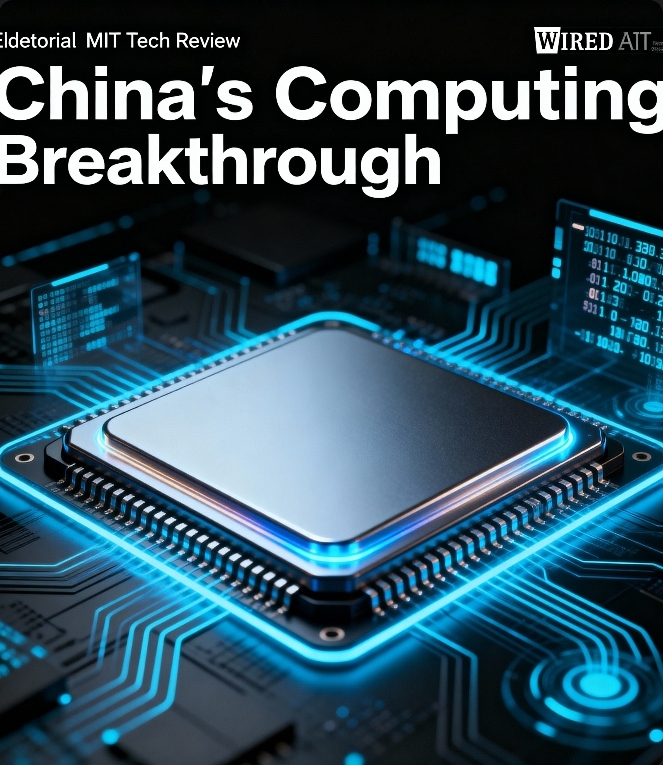
China’s Analog AI Revolution: The Chip That’s 1,000× Faster Than Nvidia’s GPUs

HTML China’s Analog AI Revolution: The Chip That’s 1,000× Faster Than Nvidia’s GPUs

China’s Analog AI Revolution: The Chip That’s 1,000× Faster Than Nvidia’s GPUs

By Elite Hustle Vault Central – November 2025

Introduction

In late 2025, researchers at Peking University in China announced a stunning breakthrough: an analog computing chip that promises to deliver **up to 1,000× the throughput** and **100× the energy efficiency** of today’s most advanced digital processors, including those from Nvidia. The development — published in the journal Nature Electronics — resurrects the notion of analog computing while tackling the “century-old problem” of precision and scalability. :contentReference[oaicite:3]{index=3}

Why Analog Computing Matters Again

Digital computing reigns today because of reliability, precision, and scalability. But as the world pushes deeper into AI, large-scale signal processing (e.g., 6G communications) and massive matrix operations, digital systems hit two big walls:

  • Memory + processor separation (the von Neumann bottleneck) — moving data between memory and compute costs time and power. :contentReference[oaicite:4]{index=4}
  • The energy and throughput limits of digital scaling — billions of AI parameters, teraflops, exaflops — demand new architectures.

Analog computing offers a radically different path: perform computation where data lives (in-memory compute) and exploit continuous physical phenomena (voltages, currents) rather than switching billions of transistors. But historically analog suffered from low precision, drift, noise and lack of scalability.

The Breakthrough: How It Works

The key innovation comes in three parts:

  1. Use of resistive random-access memory (RRAM) crossbar arrays to represent a matrix in conductance form — each cell’s conductance correspond to a matrix element. :contentReference[oaicite:5]{index=5}
  2. An iterative mixed-precision algorithm: a low-precision analog inversion (LP-INV) gives a rough solution; then high-precision analog matrix-vector multiplication (HP-MVM) refines the residual error via bit-slicing. :contentReference[oaicite:6]{index=6}
  3. Block-matrix decomposition and scalable partitioning (BlockAMC) so larger matrices can be processed by multiple arrays. :contentReference[oaicite:7]{index=7}

In their experiment, the team solved a 16 × 16 real-valued matrix to **24-bit fixed-point precision** (comparable to FP32) using 3-bit RRAM devices in a foundry-fabricated chip. :contentReference[oaicite:8]{index=8} They benchmark that their analog system “could offer a 1,000 times higher throughput and 100 times better energy efficiency” compared to state-of-the-art digital processors for the same precision. :contentReference[oaicite:9]{index=9}

Why the 1,000× Number Should Be Viewed Carefully

That “1,000 ×” headline is provocative — but it comes with caveats:

  • The benchmark is for specific matrix-equation solving workloads (e.g., matrix inversion, MIMO signal detection) — not broad AI training or general-purpose GPU workflows. :contentReference[oaicite:10]{index=10}
  • The matrix sizes in demonstration are relatively small (e.g., 16 × 16) and hardware is still a prototype. Scaling to 128 × 128 or larger introduces new physical challenges. :contentReference[oaicite:11]{index=11}
  • The analog system still requires digital peripherals (control, conversion, error correction) — so the total system overhead may reduce some of the gains. Experts on forums note that “idea/prototype and scalable system are very different things.” :contentReference[oaicite:12]{index=12}

Potential Applications

If this technology matures, some of the most compelling applications include:

  • 6G/telecom base-stations & massive MIMO: Real-time signal processing of hundreds or thousands of antennas with ultra-low latency and power. :contentReference[oaicite:13]{index=13}
  • Second-order optimization in AI training: Matrix inversion and Hessian operations could be off-loaded to analog units to accelerate large-model training. :contentReference[oaicite:14]{index=14}
  • Edge inferencing and on-device compute: Low-power analog chips could bring high compute to mobile, IoT, drones — reducing dependency on the cloud. :contentReference[oaicite:15]{index=15}

Strategic & Geopolitical Implications

This advance is not just technical — it has strategic resonance:

China’s push into analog computing underscores the nation’s broader aim of **compute sovereignty** — reducing reliance on Western-supplied GPUs (subject to export controls) and stepping into next-gen computing paradigms. The timing is critical given global tensions over AI hardware.

For established GPU vendors, the rise of analog alternatives means a possible paradigm disruption: If proven at scale, analog chips could complement or even replace GPUs in certain high-throughput, linear-algebra-intensive sectors. This shifts the competitive map in AI hardware.

Challenges That Still Loom

Despite the promise, several major engineering and ecosystem hurdles remain:

  • Device uniformity & yield: RRAM cells must perform reliably across millions of devices and maintain uniform behavior over time and temperature.
  • Noise, drift & thermal stability: Analog circuits are sensitive to environmental changes — maintaining precision at scale is tricky.
  • Interconnect, parasitic effects & scaling: As arrays grow, wiring resistance/capacitance, cross-talk and current-leak paths worsen analog precision.
  • Software/hardware integration: Existing AI frameworks are built for digital GPUs/TPUs — analog accelerators will need new toolchains, compilers and mapping flows.
  • Commercialization & cost: Moving from foundry prototype to mass-production with high yield and acceptable cost will take time.

Conclusion

The analog-computing chip developed by Peking University is a bold milestone: it challenges decades of assumptions about analog precision, showing that physical computing architectures can approach digital fidelity while delivering massive throughput and energy gains. Whether this translates into commercial reality and broad adoption remains uncertain — but the signal is loud: a new computing paradigm may be emerging. For those tracking AI hardware, this breakthrough warrants serious attention.

Disclaimer

The information in this article is for educational and informational purposes only. It reflects research reported in a peer-reviewed journal and commentary from publicly available sources. It is not financial, investment or legal advice. Performance claims (such as “1,000× faster”) are based on specific laboratory benchmarks and may not reflect general-purpose usage or commercial products.

FAQ – Frequently Asked Questions

Q: Does this analog chip replace Nvidia GPUs for AI training?

A: Not yet. The demonstration is for matrix-equation solving tasks; general-purpose AI training workflows (with convolution, attention, large transformer stacks) remain in the digital domain. Scaling and software integration are still under development.

Q: Is analog computing brand new?

A: No — analog computing has existed for decades (even before digital). What’s new is the ability to achieve high precision and scalability that rivals digital systems, which many believed was impossible for analog. :contentReference[oaicite:16]{index=16}

Q: Will this chip appear in consumer devices soon?

A: Probably not immediately. Commercialization of novel architectures typically takes several years (5–10+) from prototype to volume production, especially given ecosystem, manufacturing, toolchain, and reliability demands.

OpenAI o3 Outlook 2026