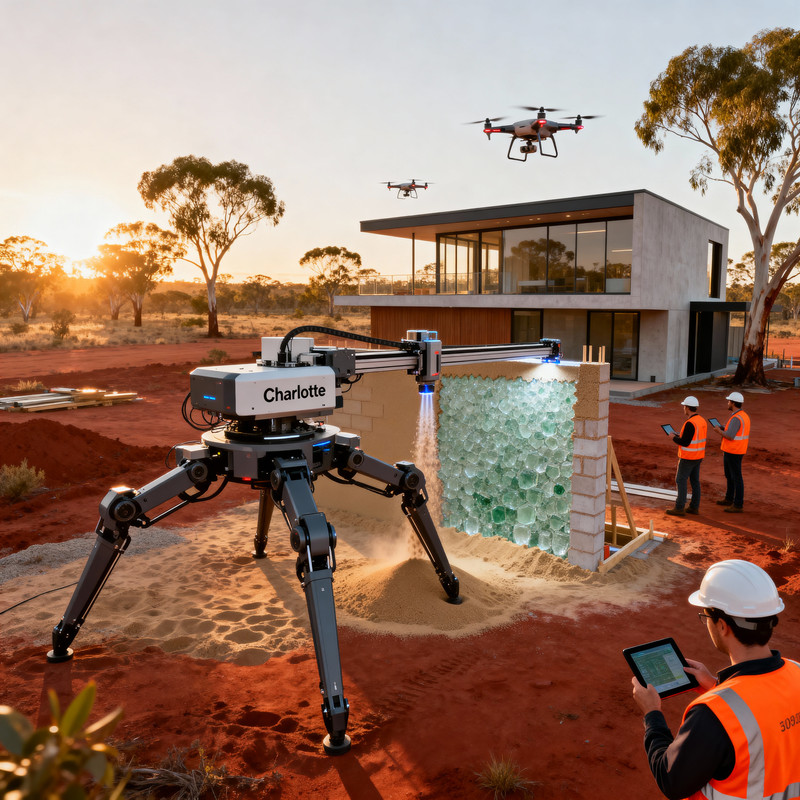
Charlotte: The Australian Robot That 3D-Prints a 2,150-sq-ft Home in One Day
By RORALRDApower · Updated Oct 2025 · 6–8 min read
What Is Charlotte?
Charlotte is an Australian-built construction robot that can 3D-print the wall system for a full-size home—about 2,150 sq ft—in roughly 24 hours. Instead of traditional formwork, the robot extrudes a printable mix to build structural walls layer by layer with high repeatability.
How the Robot 3D-Prints a House
1) Mobile precision platform
Charlotte uses a multi-leg chassis and a stabilized extrusion head guided by a digital toolpath. The motion system maintains constant nozzle height so layers bond accurately.
2) Sustainable mixes
Printable materials can include sand, crushed brick, recycled glass, and a binder tuned for strength and cure time—cutting virgin cement use and embodied carbon.
3) Hybrid hand-offs
After walls are printed, crews (or partner robots) complete MEP work—electrical, plumbing, roof, windows/doors, insulation, and finishes.
Why It Matters: Speed, Cost, Sustainability
- Speed: Walls in ~24 hours compress schedules from weeks to days.
- Cost control: Automation reduces repetitive labor and weather rework.
- Greener builds: Recycled aggregates and less formwork cut waste and emissions.
- Design freedom: Curves and thermal cavities are easier with toolpaths than with timber or concrete forms.
Limits & Open Questions
- Codes & certification: Approvals depend on local standards and testing.
- Whole-home timeline: “One day” refers to printed walls; services/roof/finishes add time.
- Envelope performance: Insulation, moisture, and acoustics must meet climate/code.
Impact on Jobs & the Future of Work
Robotic printing reshapes jobs rather than erasing them: site scanning, toolpath setup, materials tech, QA/QC, drone verification, and safety supervision. Training shifts toward digital surveying, robotics operations, and building-science literacy—raising productivity and safety while tackling housing backlogs.
Conclusion
Charlotte signals a construction model that’s faster, cleaner, and more precise. The headline is speed; the long-term win is a smarter jobsite and new skilled roles at the intersection of robotics and building science. If pilots scale to certified production, Charlotte-style systems could help address affordability and climate goals at the same time.
FAQ
Can Charlotte really print a full home in one day?
Charlotte can print the walls for a ~2,150-sq-ft layout in about 24 hours under ideal conditions. Roofing, utilities, and finishes still add time.
What materials does the robot use?
The printable mix includes sand and recycled aggregates (crushed brick, recycled glass) with a binder formulated for strength and curing time.
Is it code-compliant and safe?
Compliance varies by region. Pilot homes undergo third-party testing and standard inspections as the technology moves toward broader certification.
Connect with RORALRDApower
Collaborate, share insights, or reach the team directly.


