AI in Healthcare 2025: Opportunities, Challenges, and The Future Ahead
Introduction: Why AI in Healthcare 2025 Matters
Artificial Intelligence (AI) is no longer a futuristic dream—it’s already reshaping healthcare systems across the globe. In 2025, AI in Healthcare is being used for early disease detection, predictive analytics, administrative efficiency, and personalized patient care. But alongside opportunities, significant gaps remain. To fully unlock AI’s potential, healthcare providers must address staff training, data security, and ethical concerns.
How AI is Transforming Healthcare
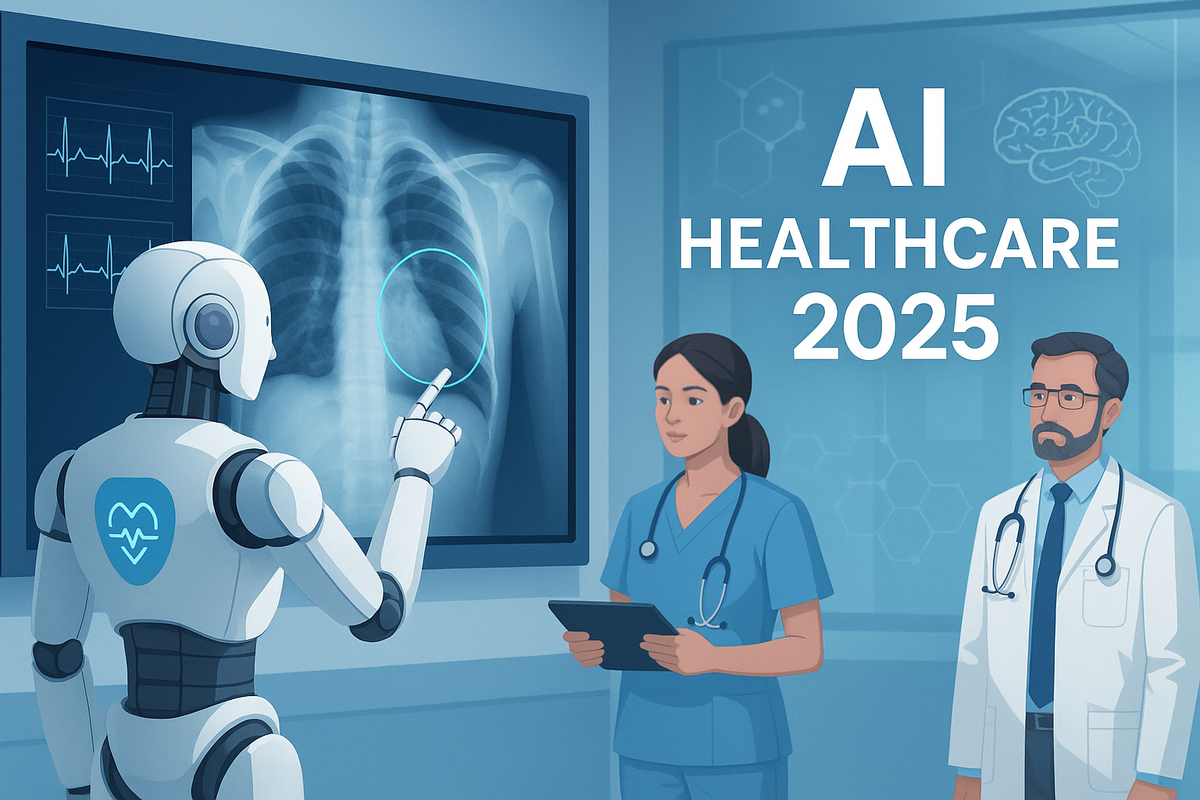
- Diagnostics: AI-powered imaging tools detect cancer, heart disease, and neurological conditions faster than humans.
- Predictive Analytics: Hospitals use AI to predict patient readmissions, manage ICU capacity, and forecast disease outbreaks.
- Personalized Medicine: Machine learning tailors treatment plans based on genetic, lifestyle, and historical data.
- Administrative Efficiency: AI automates billing, clinical documentation, and appointment scheduling.
The Missing Links: Where Healthcare Still Lacks
1. Staff Training & AI Literacy
One of the biggest gaps in adopting AI is the lack of staff readiness. Doctors, nurses, and administrators often don’t receive adequate training to use AI-powered tools effectively. Without training, they risk mistrust, underuse, or errors in AI implementation.
2. Ethical & Legal Challenges
AI introduces concerns around patient privacy, algorithm bias, and accountability. Who is responsible if an AI misdiagnoses a patient—the developer or the doctor?
3. Data Quality & Infrastructure
Many hospitals still struggle with fragmented, outdated, or biased data. AI relies on high-quality, representative datasets to make accurate predictions.
4. Integration Issues
Legacy healthcare systems are not always compatible with modern AI tools, making integration expensive and complex.
Bridging the Gaps: What Needs to Be Done
- Comprehensive Training: Hospitals must invest in ongoing AI training programs for medical staff to build confidence and competence.
- Clear Regulations: Governments should establish guidelines around AI use in patient care, liability, and data ethics.
- Improved Data Management: Healthcare systems must standardize and clean patient data for reliable AI usage.
- Collaborative Culture: IT specialists, clinicians, and policymakers should collaborate to ensure smooth AI integration.
FAQs: AI in Healthcare 2025
1. Will AI replace doctors in 2025?
No, AI is not here to replace doctors but to support them. AI can handle repetitive tasks, while doctors focus on critical thinking and patient care.
2. How does AI improve patient care?
AI enhances accuracy in diagnostics, offers personalized treatments, and reduces waiting times through predictive scheduling.
3. Is patient data safe with AI?
Data security remains a challenge. Hospitals must adopt strict cybersecurity measures and comply with regulations like HIPAA and GDPR.
4. What jobs in healthcare are most affected by AI?
Administrative roles face the highest automation, but AI also assists radiologists, pathologists, and pharmacists in their daily work.
5. How should hospitals prepare staff for AI adoption?
Regular AI workshops, cross-functional training, and real-time simulations help staff build trust and competence with AI tools.
6. What is the future of AI in Healthcare?
By 2030, AI will be deeply integrated into preventive care, mental health support, and robotic-assisted surgeries.
Conclusion
AI in Healthcare 2025 presents immense opportunities but also demands responsibility. For hospitals, success will depend on balancing innovation with ethics, investing in staff training, and strengthening infrastructure. Those who adapt early will not only reduce costs but also deliver safer, faster, and more personalized patient care.
Disclaimer
This article is for informational purposes only and does not provide medical, financial, or legal advice. Always consult qualified professionals before implementing AI technologies in healthcare settings.
Connect with ROYALRDGpower
Collaborate, share insights, or stay updated on AI transformation and digital leadership initiatives.


