Tuesday, January 13, 2026

Top 5 Critical AI Trends Redefining the 2026 Market Outlook

AI Intelligence 2026
MARKET INTELLIGENCE: 2026

Top 5 Critical AI Trends Redefining the 2026 Market Outlook

Disclaimer: This article draws on research from 2024-2025. Projections are theoretical. Consult financial advisors before making decisions.

Introduction: The Maturation of the AI Bull Market

As we enter 2026, the AI revolution is shifting from valuation-driven growth to tangible "Operational Integration." For this bull market to survive, the "AI Flywheel" must now produce real-world earnings.

1. The "Year 4" Handoff: Earnings Take the Baton

Historically, only 50% of bull markets reach Year 4. To extend the cycle, the S&P 500 must move away from the valuation-driven growth seen in the early stages.

  • The Requirement: Double-digit EPS growth from the broader market.
  • The Risk: Mean reversion if productivity doesn't hit the bottom line by Q3 2026.

2. Breakthrough Success: AI-Discovered Drugs

The pharmaceutical sector is where AI is showing its "Killer App" status. In 2026, we are seeing a 90% success rate in AI-discovered molecules for Phase I trials.

4. The Data Center Dilemma: 1,080 TWh Demand

By 2035, demand will reach 1,080 TWh. In 2026, the focus is on Energy Optimization AI, aiming to cut consumption by 20% through liquid cooling.

Conclusion: Strategic Conviction

Looking ahead, the market’s longevity depends on bridging the gap between AI hype and industrial productivity. For more technical breakdowns, visit our Security & Privacy Hub.

Frequently Asked Questions

The productivity paradox refers to the observation that productivity growth often slows down even as IT investment increases. In 2026, Agentic AI is bridging this lag by automating complex workflows.

Global demand is projected to reach 1,080 TWh by 2035. 2026 marks the shift toward high-efficiency liquid cooling and AI-optimized power grids.

PUE (Power Usage Effectiveness) is the ratio of total facility energy to IT equipment energy. A ratio of 1.0 is perfect; 2026 facilities aim for 1.2 or lower.

Sunday, January 11, 2026

Lights, Camera, AI! Video Generation Tools in 2026

Lights, Camera, AI! Video Generation Tools in 2026

Lights, Camera, AI! Your Guide to the Best Video Generation Tools & Automation in 2026 (and the Wild Ride Ahead!)

A detailed summary exploring the pervasive reality of AI video in 2026, its technological foundations, ethical challenges, and the exciting future beyond.

media_1

The Future of AI Video

Exclusive: This article is part of our AI Security & Privacy Knowledge Hub , featuring in-depth analysis on AI security risks, privacy threats, and emerging technologies.

I. Introduction: The Pervasive Reality of AI Video in 2026

AI video generation has transitioned from science fiction to a pervasive force in content creation by 2026, actively reshaping the industry. This post serves as a guide to its technological underpinnings, evolution, key tools, ethical considerations, and future outlook.

II. Understanding AI Video Generation

Core Concept: AI video generation transforms abstract inputs (text, images, audio) into dynamic videos, bypassing traditional filmmaking constraints like cameras, actors, and extensive post-production. This process is streamlined, democratized, and appears "magical."

Technological Foundations:

  • Deep Learning & Neural Networks: Extract patterns and nuances from large datasets.
  • GANs (Generative Adversarial Networks): An iterative process where one AI generates visuals and another critiques them for realism, leading to improved output.
  • NLP (Natural Language Processing): Enables AI to understand textual prompts and construct coherent narratives.
  • Computer Vision: Allows AI to interpret visual elements and object relationships.
  • Diffusion Models: Gradually remove "noise" to produce high-fidelity video.
  • 3D Modeling: Used for creating realistic AI avatars.

Current Capabilities:

  • Text-to-Video: Generates videos from textual descriptions.
  • Image-to-Video: Animates still images.
  • Instant Voiceovers: Creates natural-sounding narration in various voices and languages.
  • Automatic Editing: Handles tasks like transitions, visual effects, and music synchronization.
  • AI Avatar and Scene Creation: Generates entire environments and lifelike AI characters.

III. Historical Evolution of AI Video Generation

  • Pre-2014 (Early Days): Focused on rudimentary image recognition and basic video clip generation, laying foundational groundwork.
  • Mid-2010s (GANs Explosion): The introduction of GANs significantly improved video realism, though often limited to short clips. VGAN and MoCoGAN were key milestones.
  • Early 2020s-Present (Diffusion & Transformer Era): Characterized by diffusion models and transformer networks, enabling coherent, high-quality video creation.
    • 2022: Saw the release of CogVideo, Meta's Make-A-Video, and Google's Imagen Video.
    • 2023: Runway Gen-1 and Gen-2 democratized text-to-video access.
    • 2024: Marked by Stability AI's Stable Video Diffusion, Tencent's Hunyuan, Luma Labs' Dream Machine, OpenAI's Sora (notable for realism and narrative potential), Google's Lumiere and Veo.
    • 2025: Adobe Firefly Video integrated into professional workflows; Google continued refining Veo.
  • This rapid progression has established AI video as a sophisticated tool.

IV. Leading AI Video Generation Tools in 2026

Market Growth Drivers:

  • The market is projected to reach nearly one billion dollars by the end of 2026.
  • Businesses recognize the value of personalized video and accelerated content creation.
  • Reduced production costs and streamlined workflows are key attractions.

Prominent Tools (as of 2026):

  • OpenAI Sora: The benchmark for cinematic realism and narrative complexity.
  • Google Veo: Offers high-fidelity video with creative control and integrated sound design.
  • Runway ML (Gen-4): A platform for artists to blend AI with artistic vision for complex narratives.
  • Higgsfield: Provides an ecosystem for real-time interaction, sound, and post-production.
  • Synthesia & HeyGen: Specialized in corporate videos with hyper-realistic AI avatars and multilingual support.
  • Adobe Firefly Video: Integrates into professional suites like Premiere Pro, enhancing existing workflows.
  • Pictory, Lumen5, Descript: Tools for quick content creation and script-based editing.
  • Other notable tools: Pika, InVideo, Colossyan, DeepBrain AI, CapCut (AI assist), LTX Studio, Magic Hour.

Impact: These tools democratize video production for individuals and enterprises.

V. Ethical Considerations and Challenges

Ethical Minefield:

  • Consent & Privacy: Concerns arise from using personal data for AI training without explicit consent.
  • Bias & Discrimination: AI models can perpetuate societal biases if trained on unrepresentative data.
  • Economic Displacement: Automation of video production tasks threatens human jobs, with projections of a 21% income loss by 2028.
  • Erosion of Trust: The ability to create convincing fake videos blurs reality and fabrication.
  • Harmful Content: Potential for generating explicit, violent, or illegal content.

The Deepfake Dilemma:

  • Misinformation: Weaponized for disinformation, fabricated speeches, and social unrest.
  • Identity Theft & Fraud: Used for blackmail, financial scams, and impersonation.
  • Non-Consensual Content: Creation of pornographic deepfakes without consent.
  • Undermining Justice: Fabrication of video evidence casts doubt on judicial integrity.

Intellectual Property (IP) Issues:

  • Copyright Confusion: Authorship is unclear when AI is involved; generally, human creative input is required for authorship.
  • Training Data Lawsuits: Legal battles over the use of copyrighted material for AI training.
  • Terms & Conditions: Crucial to review tool-specific terms regarding content ownership.
  • Likeness Protection: An individual's likeness is not protected by the same legal framework as tangible creations, making it difficult to prevent AI use.

VI. Future Outlook for AI Video (Beyond 2026)

  • Real-time Interaction: Live adjustment of camera angles, lighting, and character emotions during AI generation.
  • Hyper-Personalization: Videos adapting to individual preferences, mood, language, and even names.
  • Unified AI Workflows: AI handling entire production pipelines (script, visuals, sound, editing, distribution) autonomously from a single prompt, blending various media inputs.
  • Intelligent Sound Design: Dynamic, scene-aware soundscapes and emotion-driven musical scores.
  • World Models & Smarter AI: AI understanding physics for realistic simulations and digital twins.
  • Rise of AI Agents: AI acting as self-guided collaborators for multi-step tasks without constant human input.
  • Seamless Integration: Effortless integration into existing editing software, social media schedulers, and content management systems.
  • Predictable Future: Focus on consistent, high-quality, and reliable results.
  • Social Media Domination: Automatic reformatting of videos for platforms like TikTok and Reels with animated captions.

VII. Conclusion: Navigating the AI Video Landscape

In 2026, AI video is a powerful, accessible, and transformative force offering opportunities for increased efficiency and reduced costs. Responsible use, awareness of ethical pitfalls, and understanding IP challenges are crucial. The most valuable skill will be effective communication with AI to guide its capabilities. AI is poised to not only create videos but also redefine storytelling itself.

Friday, January 9, 2026

Artificial Intelligence is powerful, but it is not risk-free

Exclusive: This article is part of our AI Security & Privacy Knowledge Hub , the central vault for elite analysis on AI security risks and data breaches.

AI security and privacy risks including browser data exposure, data breaches, and AI misuse

AI Security & Privacy Hub: Risks, Breaches, and How to Stay Safe

Introduction

Artificial Intelligence is powerful, but it is not risk-free. As AI tools spread across browsers, workplaces, and personal devices, security and privacy vulnerabilities are increasing faster than most users realize.

AI Data Privacy Risks

  • Stored AI chat logs
  • Training data exposure
  • Third-party plugin access

Browser Extensions & AI Exploits

  • Unauthorized reading of AI conversations
  • Script injection into AI sessions
  • Silent data transfer to external servers

How to Protect Yourself When Using AI

  • Avoid sharing sensitive or personal data
  • Review browser extension permissions carefully
  • Disable or remove unnecessary plugins

Conclusion

AI security is no longer optional. Understanding risks today helps prevent serious data loss, privacy violations, and long-term damage tomorrow.

Thursday, January 8, 2026

Claude Code: How Developers Are Using AI to Build Faster and Smarter

Exclusive: This article is part of our AI Security & Privacy Knowledge Hub , the central vault for elite analysis on AI security risks and data breaches.

Claude Code AI workflow for developers

Claude Code: How Developers Are Using AI to Build Faster and Smarter

AI-powered coding tools are rapidly reshaping modern software development. Among them, Claude Code has emerged as a reasoning-first AI workflow that helps developers understand, refactor, and build complex systems with greater confidence.

Unlike traditional autocomplete tools, Claude Code emphasizes context, logic, and long-form reasoning—making it especially valuable for production environments and large, mission-critical codebases.

What Is Claude Code?

Claude Code refers to developer workflows powered by Anthropic’s Claude AI model. It assists with debugging, documentation, system design, refactoring, and deep code comprehension rather than simple code completion.

How Developers Use Claude Code

  • Understanding large and unfamiliar codebases
  • Safely refactoring legacy systems
  • Debugging complex logic and architectural issues
  • Generating clean, maintainable code
  • Improving internal and external documentation

Claude Code vs Traditional Coding Assistants

Most AI coding assistants prioritize speed and autocomplete. Claude Code prioritizes reasoning, correctness, and explainability, making it better suited for high-stakes software projects where understanding matters more than raw output speed.

Why Claude Code Matters

As software systems grow in complexity, developers need AI tools that understand intent, dependencies, and architectural context. Claude Code represents a shift toward collaborative AI— supporting human decision-making rather than replacing it.

Best Practices When Using Claude Code

  • Always review AI-generated code before deployment
  • Never share API keys, credentials, or sensitive data
  • Use AI as an assistant, not a final authority

Conclusion

Claude Code does not replace developers. Instead, it enhances problem-solving, accelerates learning, and helps teams build more reliable software when used responsibly. The future of development is human-led, AI-assisted.

Disclaimer

This article is for informational and educational purposes only. It does not constitute professional, security, or legal advice. Always follow your organization’s policies and best practices when using AI tools in development workflows.


Frequently Asked Questions

Is Claude Code free to use?

Claude offers both free and paid access depending on usage limits and available developer features.

Is Claude Code safe for professional development?

Yes, when used responsibly. Developers should avoid sharing sensitive data and must carefully review all outputs.

Can Claude Code replace human developers?

No. Claude Code is designed to assist developers, not replace human judgment or expertise.

Chrome extensions were caught stealing ChatGPT and DeepSeek conversations from over 900,000 users

Exclusive: This article is part of our AI Security & Privacy Knowledge Hub , the central vault for elite analysis on AI security risks and data breaches.

Chrome extensions caught stealing ChatGPT and DeepSeek conversations

Chrome extensions were caught stealing ChatGPT and DeepSeek conversations from over 900,000 users. Here’s what happened, how it works, and how to stay safe.

Introduction

AI tools like ChatGPT and DeepSeek have become daily work companions for developers, founders, students, and businesses. But a recent cybersecurity investigation revealed a serious threat hiding in plain sight: browser extensions secretly harvesting private AI conversations.

What Happened?

Multiple Chrome extensions were found accessing and exfiltrating private AI chat data without user consent. These extensions operated silently in the background, exploiting overly broad browser permissions granted during installation.

How Chrome Extensions Stole AI Chats

  • Reading and modifying data on visited websites
  • Monitoring AI chat interfaces in real time
  • Capturing text input and AI responses
  • Sending harvested data to external servers

Why ChatGPT and DeepSeek Chats Were Targeted

AI conversations frequently contain sensitive information such as proprietary business ideas, software code, legal drafts, credentials, and personal data. This makes AI chat platforms high-value targets for data harvesting operations.

The Scale of the Breach

  • Over 900,000 users affected
  • Multiple malicious extensions involved
  • Users across several countries impacted
  • Extended periods of silent data collection

Why This Is a Bigger AI Security Problem

AI adoption is accelerating faster than security awareness. While users often trust browser extensions to enhance productivity, extensions remain one of the weakest and least monitored links in the modern AI ecosystem.

How to Protect Yourself

  • Audit browser extensions regularly
  • Remove extensions you no longer use
  • Avoid granting unnecessary permissions
  • Never input highly sensitive data into AI chats
  • Install extensions only from verified developers

What This Means for the Future of AI

This incident highlights a critical reality: AI privacy does not stop at the platform level. Security must extend across browsers, extensions, and user behavior. Without stronger controls, AI tools could become one of the largest unintentional data leaks in modern computing.

Frequently Asked Questions

Were ChatGPT or DeepSeek hacked?

No. The AI platforms themselves were not breached. The data was accessed through malicious browser extensions installed by users.

How can I tell if an extension is stealing data?

Red flags include excessive permissions, vague privacy policies, unknown developers, and unexplained browser slowdowns or network activity.

Is it safe to use AI tools in a browser?

Yes, as long as users actively manage extensions, avoid unverified tools, and remain cautious with sensitive information.

Conclusion

The Chrome extension data theft incident is a wake-up call for the AI era. Convenience without caution comes at a cost. If users fail to take responsibility for digital hygiene, AI platforms may become one of the easiest data-leak vectors in modern history.

Disclaimer: This article is for informational and educational purposes only. It does not constitute legal, cybersecurity, or professional advice.

Saturday, January 3, 2026

Top Technology Trends Reshaping 2026

Exclusive: This article is part of our AI Security & Privacy Knowledge Hub , the central vault for elite analysis on AI security risks and data breaches.

Top Technology Trends Reshaping 2026 | AI, Automation & Digital Evolution

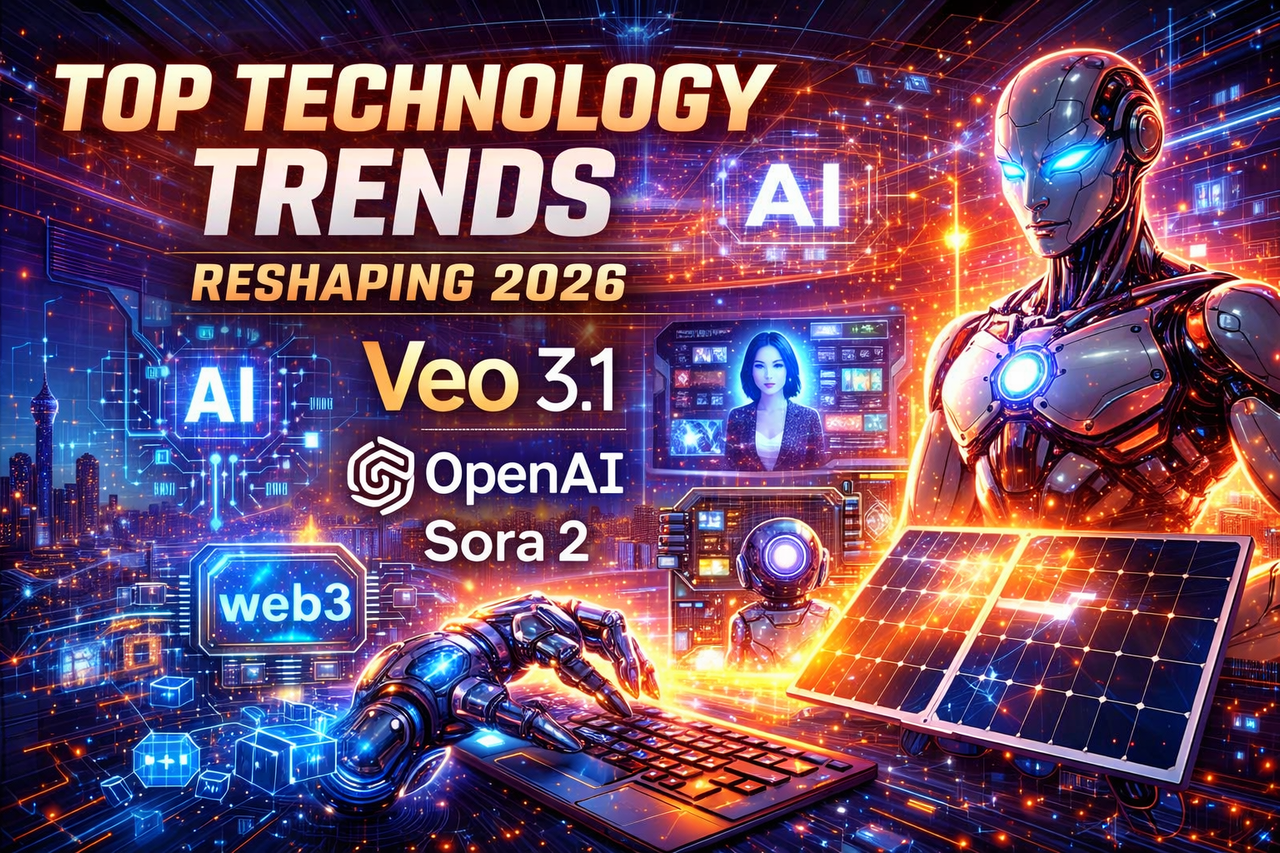
Top Technology Trends Reshaping 2026

2026 is not just another tech year—it marks a structural shift. Technology is no longer evolving in isolation. Artificial intelligence, automation, digital infrastructure, and sustainability are now deeply interconnected, reshaping economies, creativity, governance, and everyday life.

Top technology trends reshaping 2026 including advanced AI agents, Veo 3.1 video AI, OpenAI Sora 2, Web3, and ethical artificial intelligence

This guide explores the most important technology trends defining 2026, with a focus on ethical innovation, real-world adoption, and long-term impact.

1. Autonomous AI Agents Become Digital Co-Workers

In 2026, AI has moved beyond simple chatbots. Autonomous AI agents now plan, execute, and improve tasks with minimal human input.

  • AI agents managing research, scheduling, and operations
  • Multi-agent systems collaborating on complex goals
  • Ethical guardrails ensuring transparency and control

Why it matters: AI is no longer just a tool—it is becoming a digital workforce that amplifies human capability rather than replacing it.

2. Generative Video & Media Explosion (Veo 3.1, Sora 2)

2026 is the year generative media goes mainstream. Tools like Veo 3.1 and OpenAI Sora 2 allow creators, educators, and businesses to generate cinematic-quality video from text, images, and structured prompts.

  • AI-generated films, ads, and documentaries
  • Rapid content localization across languages
  • Ethical watermarking and AI content disclosure

Why it matters: Storytelling is no longer limited by production budgets—ideas become visuals instantly, democratizing media creation.

3. Digital Transformation Evolves into AI-First Infrastructure

By 2026, digital transformation means AI-first architecture. Organizations now design systems where AI is embedded at the core, not added later.

  • AI-powered operating systems for enterprises
  • Predictive cybersecurity and fraud prevention
  • Real-time decision intelligence

Why it matters: Companies that fail to adopt AI-native systems risk becoming structurally uncompetitive.

4. Web3 Infrastructure Becomes Invisible but Essential

In 2026, Web3 is no longer hype—it is infrastructure. Blockchain operates quietly in the background, enabling trust, ownership, and verification.

  • Decentralized identity and credentials
  • Transparent supply chains
  • Tokenized digital assets with real utility

Why it matters: Trust becomes programmable, reducing reliance on centralized intermediaries.

5. Sustainable & Responsible Computing Takes Center Stage

As AI scales, sustainability becomes non-negotiable. In 2026, innovation is measured not just by power—but by responsibility.

  • Energy-efficient AI models
  • Green data centers and carbon-aware computing
  • Ethical AI governance and regulation

Why it matters: Long-term success belongs to technologies that respect both people and the planet.

Conclusion: The Future Is Ethical, Intelligent, and Human-Centered

The technologies reshaping 2026 are powerful—but power alone is not enough. The real winners will be those who deploy innovation responsibly, ethically, and inclusively.

AI, automation, generative media, and digital infrastructure are not replacing humanity—they are redefining what humanity can achieve.

Stay Ahead of the Curve

Follow our insights on AI, future technology, and digital transformation as we track the next phase of global innovation.

Friday, January 2, 2026

China’s DeepSeek AI Breakthrough (2026)

Exclusive: This article is part of our AI Security & Privacy Knowledge Hub , the central vault for elite analysis on AI security risks and data breaches.

China’s DeepSeek AI Breakthrough (2026): How Chip Wars Are Reshaping Global Power
Global AI Chip War 2026

China’s DeepSeek AI Breakthrough (2026)

Unlike traditional models, DeepSeek’s approach focuses on architectural efficiency—enabling advanced reasoning with fewer hardware dependencies. This matters as Western export controls restrict access to high-end AI chips.

The Chip War That Changed Everything

The AI divide between East and West widened after semiconductor restrictions. While Western firms limited exports, China accelerated domestic alternatives. This escalation reshaped supply chains and forced a new era of AI self-reliance.

Frequently Asked Questions

What is DeepSeek AI?
A Chinese AI breakthrough focused on efficiency rather than raw compute scale.

Are Western chips still dominant?
While still powerful, models like DeepSeek prove that software architecture can bypass hardware bottlenecks.

OpenAI o3 Outlook 2026