Friday, January 9, 2026

Artificial Intelligence is powerful, but it is not risk-free

Exclusive: This article is part of our AI Security & Privacy Knowledge Hub , the central vault for elite analysis on AI security risks and data breaches.

AI security and privacy risks including browser data exposure, data breaches, and AI misuse

AI Security & Privacy Hub: Risks, Breaches, and How to Stay Safe

Introduction

Artificial Intelligence is powerful, but it is not risk-free. As AI tools spread across browsers, workplaces, and personal devices, security and privacy vulnerabilities are increasing faster than most users realize.

AI Data Privacy Risks

  • Stored AI chat logs
  • Training data exposure
  • Third-party plugin access

Browser Extensions & AI Exploits

  • Unauthorized reading of AI conversations
  • Script injection into AI sessions
  • Silent data transfer to external servers

How to Protect Yourself When Using AI

  • Avoid sharing sensitive or personal data
  • Review browser extension permissions carefully
  • Disable or remove unnecessary plugins

Conclusion

AI security is no longer optional. Understanding risks today helps prevent serious data loss, privacy violations, and long-term damage tomorrow.

Thursday, January 8, 2026

Claude Code: How Developers Are Using AI to Build Faster and Smarter

Exclusive: This article is part of our AI Security & Privacy Knowledge Hub , the central vault for elite analysis on AI security risks and data breaches.

Claude Code AI workflow for developers

Claude Code: How Developers Are Using AI to Build Faster and Smarter

AI-powered coding tools are rapidly reshaping modern software development. Among them, Claude Code has emerged as a reasoning-first AI workflow that helps developers understand, refactor, and build complex systems with greater confidence.

Unlike traditional autocomplete tools, Claude Code emphasizes context, logic, and long-form reasoning—making it especially valuable for production environments and large, mission-critical codebases.

What Is Claude Code?

Claude Code refers to developer workflows powered by Anthropic’s Claude AI model. It assists with debugging, documentation, system design, refactoring, and deep code comprehension rather than simple code completion.

How Developers Use Claude Code

  • Understanding large and unfamiliar codebases
  • Safely refactoring legacy systems
  • Debugging complex logic and architectural issues
  • Generating clean, maintainable code
  • Improving internal and external documentation

Claude Code vs Traditional Coding Assistants

Most AI coding assistants prioritize speed and autocomplete. Claude Code prioritizes reasoning, correctness, and explainability, making it better suited for high-stakes software projects where understanding matters more than raw output speed.

Why Claude Code Matters

As software systems grow in complexity, developers need AI tools that understand intent, dependencies, and architectural context. Claude Code represents a shift toward collaborative AI— supporting human decision-making rather than replacing it.

Best Practices When Using Claude Code

  • Always review AI-generated code before deployment
  • Never share API keys, credentials, or sensitive data
  • Use AI as an assistant, not a final authority

Conclusion

Claude Code does not replace developers. Instead, it enhances problem-solving, accelerates learning, and helps teams build more reliable software when used responsibly. The future of development is human-led, AI-assisted.

Disclaimer

This article is for informational and educational purposes only. It does not constitute professional, security, or legal advice. Always follow your organization’s policies and best practices when using AI tools in development workflows.


Frequently Asked Questions

Is Claude Code free to use?

Claude offers both free and paid access depending on usage limits and available developer features.

Is Claude Code safe for professional development?

Yes, when used responsibly. Developers should avoid sharing sensitive data and must carefully review all outputs.

Can Claude Code replace human developers?

No. Claude Code is designed to assist developers, not replace human judgment or expertise.

Chrome extensions were caught stealing ChatGPT and DeepSeek conversations from over 900,000 users

Exclusive: This article is part of our AI Security & Privacy Knowledge Hub , the central vault for elite analysis on AI security risks and data breaches.

Chrome extensions caught stealing ChatGPT and DeepSeek conversations

Chrome extensions were caught stealing ChatGPT and DeepSeek conversations from over 900,000 users. Here’s what happened, how it works, and how to stay safe.

Introduction

AI tools like ChatGPT and DeepSeek have become daily work companions for developers, founders, students, and businesses. But a recent cybersecurity investigation revealed a serious threat hiding in plain sight: browser extensions secretly harvesting private AI conversations.

What Happened?

Multiple Chrome extensions were found accessing and exfiltrating private AI chat data without user consent. These extensions operated silently in the background, exploiting overly broad browser permissions granted during installation.

How Chrome Extensions Stole AI Chats

  • Reading and modifying data on visited websites
  • Monitoring AI chat interfaces in real time
  • Capturing text input and AI responses
  • Sending harvested data to external servers

Why ChatGPT and DeepSeek Chats Were Targeted

AI conversations frequently contain sensitive information such as proprietary business ideas, software code, legal drafts, credentials, and personal data. This makes AI chat platforms high-value targets for data harvesting operations.

The Scale of the Breach

  • Over 900,000 users affected
  • Multiple malicious extensions involved
  • Users across several countries impacted
  • Extended periods of silent data collection

Why This Is a Bigger AI Security Problem

AI adoption is accelerating faster than security awareness. While users often trust browser extensions to enhance productivity, extensions remain one of the weakest and least monitored links in the modern AI ecosystem.

How to Protect Yourself

  • Audit browser extensions regularly
  • Remove extensions you no longer use
  • Avoid granting unnecessary permissions
  • Never input highly sensitive data into AI chats
  • Install extensions only from verified developers

What This Means for the Future of AI

This incident highlights a critical reality: AI privacy does not stop at the platform level. Security must extend across browsers, extensions, and user behavior. Without stronger controls, AI tools could become one of the largest unintentional data leaks in modern computing.

Frequently Asked Questions

Were ChatGPT or DeepSeek hacked?

No. The AI platforms themselves were not breached. The data was accessed through malicious browser extensions installed by users.

How can I tell if an extension is stealing data?

Red flags include excessive permissions, vague privacy policies, unknown developers, and unexplained browser slowdowns or network activity.

Is it safe to use AI tools in a browser?

Yes, as long as users actively manage extensions, avoid unverified tools, and remain cautious with sensitive information.

Conclusion

The Chrome extension data theft incident is a wake-up call for the AI era. Convenience without caution comes at a cost. If users fail to take responsibility for digital hygiene, AI platforms may become one of the easiest data-leak vectors in modern history.

Disclaimer: This article is for informational and educational purposes only. It does not constitute legal, cybersecurity, or professional advice.

Saturday, January 3, 2026

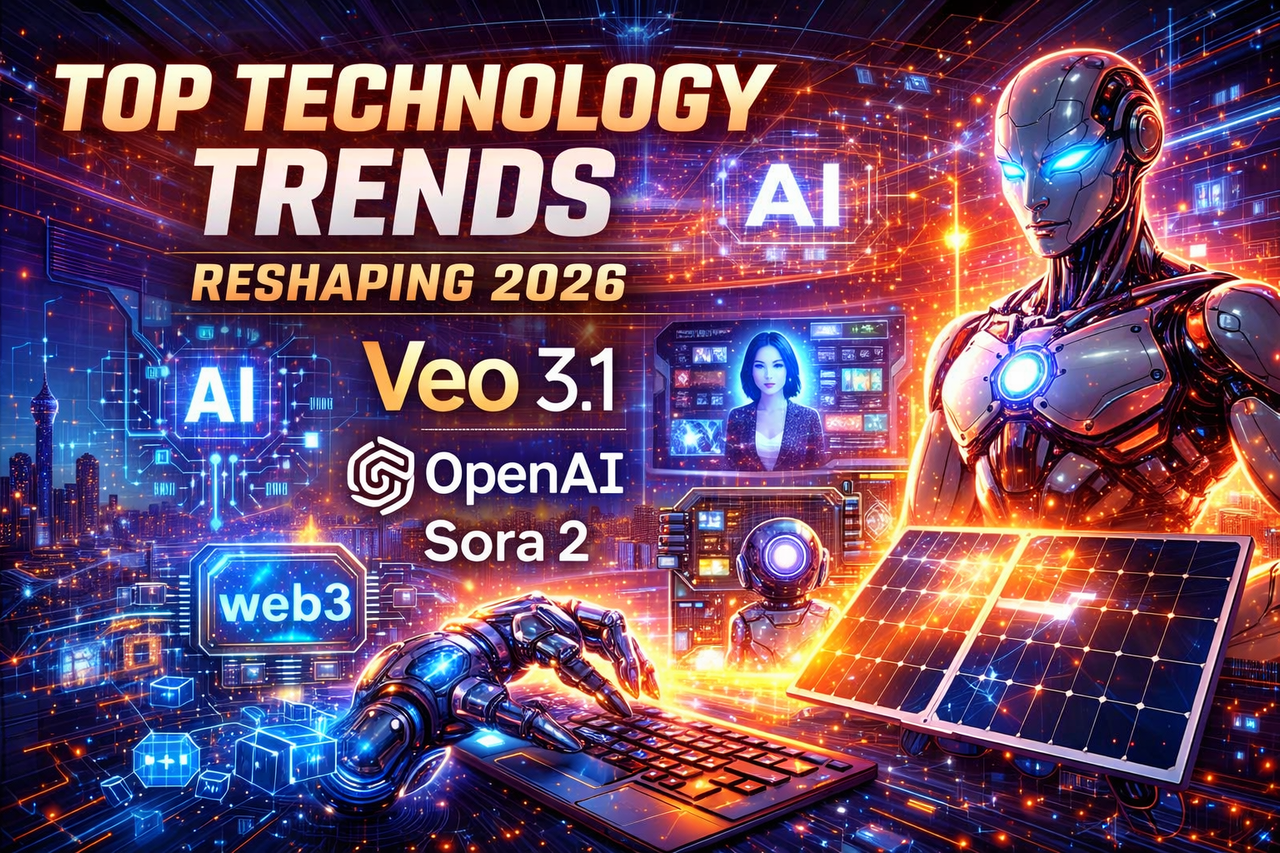
Top Technology Trends Reshaping 2026

Exclusive: This article is part of our AI Security & Privacy Knowledge Hub , the central vault for elite analysis on AI security risks and data breaches.

Top Technology Trends Reshaping 2026 | AI, Automation & Digital Evolution

Top Technology Trends Reshaping 2026

2026 is not just another tech year—it marks a structural shift. Technology is no longer evolving in isolation. Artificial intelligence, automation, digital infrastructure, and sustainability are now deeply interconnected, reshaping economies, creativity, governance, and everyday life.

Top technology trends reshaping 2026 including advanced AI agents, Veo 3.1 video AI, OpenAI Sora 2, Web3, and ethical artificial intelligence

This guide explores the most important technology trends defining 2026, with a focus on ethical innovation, real-world adoption, and long-term impact.

1. Autonomous AI Agents Become Digital Co-Workers

In 2026, AI has moved beyond simple chatbots. Autonomous AI agents now plan, execute, and improve tasks with minimal human input.

  • AI agents managing research, scheduling, and operations
  • Multi-agent systems collaborating on complex goals
  • Ethical guardrails ensuring transparency and control

Why it matters: AI is no longer just a tool—it is becoming a digital workforce that amplifies human capability rather than replacing it.

2. Generative Video & Media Explosion (Veo 3.1, Sora 2)

2026 is the year generative media goes mainstream. Tools like Veo 3.1 and OpenAI Sora 2 allow creators, educators, and businesses to generate cinematic-quality video from text, images, and structured prompts.

  • AI-generated films, ads, and documentaries
  • Rapid content localization across languages
  • Ethical watermarking and AI content disclosure

Why it matters: Storytelling is no longer limited by production budgets—ideas become visuals instantly, democratizing media creation.

3. Digital Transformation Evolves into AI-First Infrastructure

By 2026, digital transformation means AI-first architecture. Organizations now design systems where AI is embedded at the core, not added later.

  • AI-powered operating systems for enterprises
  • Predictive cybersecurity and fraud prevention
  • Real-time decision intelligence

Why it matters: Companies that fail to adopt AI-native systems risk becoming structurally uncompetitive.

4. Web3 Infrastructure Becomes Invisible but Essential

In 2026, Web3 is no longer hype—it is infrastructure. Blockchain operates quietly in the background, enabling trust, ownership, and verification.

  • Decentralized identity and credentials
  • Transparent supply chains
  • Tokenized digital assets with real utility

Why it matters: Trust becomes programmable, reducing reliance on centralized intermediaries.

5. Sustainable & Responsible Computing Takes Center Stage

As AI scales, sustainability becomes non-negotiable. In 2026, innovation is measured not just by power—but by responsibility.

  • Energy-efficient AI models
  • Green data centers and carbon-aware computing
  • Ethical AI governance and regulation

Why it matters: Long-term success belongs to technologies that respect both people and the planet.

Conclusion: The Future Is Ethical, Intelligent, and Human-Centered

The technologies reshaping 2026 are powerful—but power alone is not enough. The real winners will be those who deploy innovation responsibly, ethically, and inclusively.

AI, automation, generative media, and digital infrastructure are not replacing humanity—they are redefining what humanity can achieve.

Stay Ahead of the Curve

Follow our insights on AI, future technology, and digital transformation as we track the next phase of global innovation.

Friday, January 2, 2026

China’s DeepSeek AI Breakthrough (2026)

Exclusive: This article is part of our AI Security & Privacy Knowledge Hub , the central vault for elite analysis on AI security risks and data breaches.

China’s DeepSeek AI Breakthrough (2026): How Chip Wars Are Reshaping Global Power
Global AI Chip War 2026

China’s DeepSeek AI Breakthrough (2026)

Unlike traditional models, DeepSeek’s approach focuses on architectural efficiency—enabling advanced reasoning with fewer hardware dependencies. This matters as Western export controls restrict access to high-end AI chips.

The Chip War That Changed Everything

The AI divide between East and West widened after semiconductor restrictions. While Western firms limited exports, China accelerated domestic alternatives. This escalation reshaped supply chains and forced a new era of AI self-reliance.

Frequently Asked Questions

What is DeepSeek AI?
A Chinese AI breakthrough focused on efficiency rather than raw compute scale.

Are Western chips still dominant?
While still powerful, models like DeepSeek prove that software architecture can bypass hardware bottlenecks.

Saturday, December 6, 2025

China’s Nvidia Surges 500%: How Moore Threads Is Rewriting the AI Chip War

China’s Nvidia Surges 500%: How Moore Threads Is Rewriting the AI Chip War

Moore Threads China GPU AI Chip Rally
Moore Threads explodes 500% in its IPO debut as China searches for an Nvidia of its own.

China’s semiconductor ambitions just got their biggest win yet. Moore Threads — often called “China’s Nvidia” — shocked global markets after its stock exploded 500%+ on IPO day, instantly making it one of the hottest tech listings of the year.

This sudden rally signals something far bigger than investor hype: China is building an independent GPU ecosystem outside U.S. control.

Why This Matters

The U.S. export bans that blocked Nvidia from selling high-end AI chips to China created a massive vacuum. Moore Threads is now stepping into that vacuum — fast.

“If China cannot buy Nvidia, China will try to become Nvidia.”

The IPO frenzy shows strong domestic support for home-grown chip innovators, especially in AI and data-center acceleration.

About Moore Threads

Founded in 2020 by ex-Nvidia engineers, the company focuses on GPUs for AI, gaming, cloud rendering, and autonomous systems. Their national mission is clear: Break reliance on U.S. semiconductor giants.

Key IPO Stats

  • Stock code: 688795
  • IPO surge: 500%+
  • Sector: AI GPUs & Semiconductor
  • Founded: 2020
  • Core mission: Build China’s Nvidia alternative

Why Investors Are Betting Big

Local investors are pouring money into “strategic tech independence” — companies that strengthen China’s position in AI and chip manufacturing.

Moore Threads fits perfectly into this national agenda.

Why the Surge Is Structural, Not Hype

Analysts say this is not a meme pump or speculative bubble.

The demand for domestic GPUs in China is bigger than supply — and policy is pushing it forward.

However, the real test for Moore Threads will not be IPO day, but whether the company can:

  • Prove hardware performance
  • Win enterprise and cloud customers
  • Scale production without relying on banned U.S. tech

Quick Take

This rally is a structural shift — not just a stock movement. Valuations will now depend on hardware breakthroughs and real revenues beyond the IPO excitement.

The Bigger Picture

If Moore Threads continues scaling, China may finally have its first true Nvidia challenger — reshaping the global AI battlefield.

Meta’s $70 Billion Metaverse Crash: Zuckerberg Finally Admits 'It’s Not Working

Meta’s $70 Billion Metaverse Crash: Zuckerberg Finally Admits “It’s Not Working”

Meta’s $70 Billion Metaverse Meltdown: Zuckerberg Finally Says “It’s Not Working”

Silicon Valley — After four years of historic spending, collapsing user adoption, and repeated investor warnings, Mark Zuckerberg has finally admitted the truth about the Metaverse: “It’s not working.”

Mark Zuckerberg Metaverse Failure

📉 The $70 Billion Reality Check

Meta’s Reality Labs division has now accumulated $70B in losses — one of the most expensive product failures in tech history. In Q3 2025 alone, the division reported a staggering $4.4 billion loss, mainly from VR hardware, software development, and virtual real estate investments.

“Zuckerberg didn’t just bet big. He bet the entire company — and lost.” — Tech Market Analyst, JP Securities

🚨 Why the Metaverse Failed

  • High headset cost ($499–$999)
  • Low daily active users
  • Awkward social interactions
  • Lack of real-world utility
  • Businesses abandoned early pilots

🔄 Meta’s New Strategy: AI or Nothing

Meta is now shifting into what Zuckerberg calls its “Superintelligence Roadmap” — a full corporate pivot into AI systems, smart glasses, and multimodal assistants designed to rival OpenAI, Anthropic, and Google DeepMind.

Major pivot: Reality Labs budget cut by 30% → AI and smart glasses budget increased by 40%.

📈 Why Investors Are Celebrating

Meta stock climbed 4% immediately following the announcement. Wall Street believes this pivot may save the company from continuing to burn billions on an unpopular vision.

📅 Timeline: 4 Years of Metaverse Failure

  • 2021 — “Meta” name announced
  • 2022 — Horizon Worlds launches to low engagement
  • 2023 — Developers abandon VR projects
  • 2024 — AI assistants outperform VR adoption
  • 2025 — Losses pass $70B → Pivot begins

🧭 What Happens Next?

Meta will now focus on:

  • AI-powered Ray-Ban smart glasses
  • Multimodal assistants
  • AI avatars
  • AI content creation tools
  • Hyper-personalized advertising systems

Conclusion

The Metaverse wasn’t just a failed product — it was a failed era. Meta’s pivot to AI is not optional; it is survival. And for Zuckerberg, admitting defeat is the clearest sign yet that Silicon Valley has officially moved on from VR hype to the new trillion-dollar race: global AI dominance.

© 2025 Elite Hustle Vault Central — All Rights Reserved.

OpenAI o3 Outlook 2026