X-BAT: How AI is Reshaping the Future of Military Power on Land, Sea, and Air
1. The Evolution of the AI Battlefield
Artificial Intelligence is no longer confined to offices or labs — it’s on the battlefield. From predictive targeting to autonomous drones, AI is now central to how modern warfare is planned and executed. The “future of work” has shifted from the factory floor to the frontlines, where machine learning systems execute split-second decisions once made by humans.
2. Meet X-BAT: The Autonomous Fighter Jet of the Future
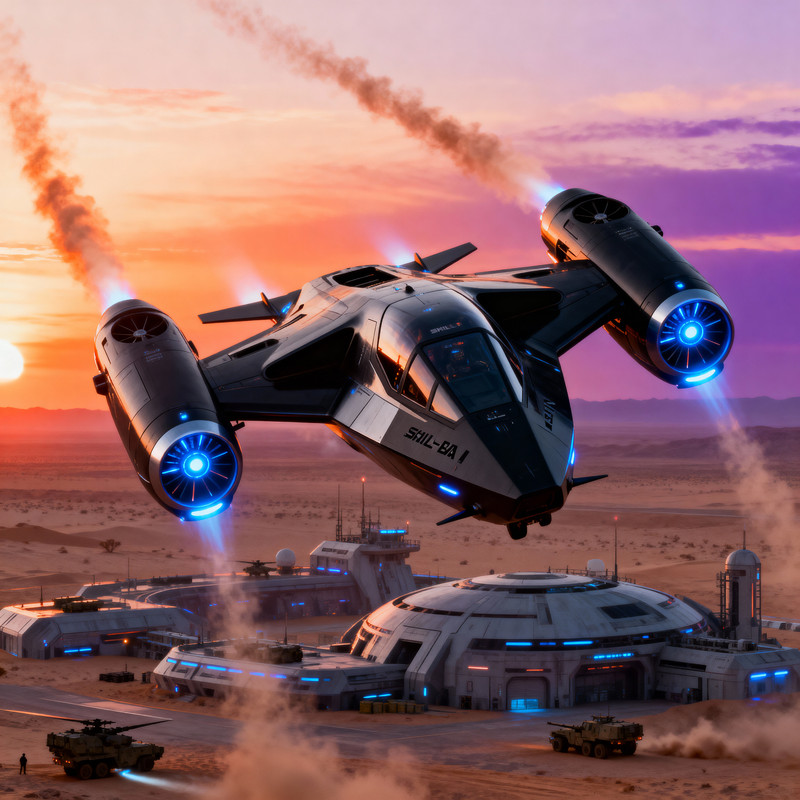
The X-BAT by Shield AI is more than a concept. It’s a next-generation, vertical takeoff and landing (VTOL) fighter designed to operate without runways or direct pilot control. Guided by Hivemind AI, the X-BAT can plan missions, engage targets, and adapt to threats autonomously — all while coordinating with other air and ground systems.
3. AI’s Role Across Land, Sea, and Air
Defense AI isn’t limited to the sky. The same principles behind the X-BAT’s autonomy are reshaping naval fleets, ground robots, and logistics. From AI-assisted submarines to autonomous armored vehicles, defense networks are becoming a mesh of intelligent agents communicating in real time.
4. The Future of Work — Military Edition
In this era, “future of work” means soldiers and AI sharing missions. Humans provide strategy, while autonomous systems handle speed and precision. This human-AI collaboration transforms both military and civilian applications — from disaster response to planetary exploration.
5. Challenges and Ethics of Autonomous Warfare
Autonomous combat raises urgent ethical debates: Who’s responsible if an AI makes a wrong decision? Can machines truly follow human rules of engagement? Governments and companies are now racing to create frameworks that balance innovation with accountability.
Conclusion
The X-BAT is a glimpse into the next decade of defense evolution — a synthesis of AI, autonomy, and aerospace engineering. As warfare shifts from human reflexes to algorithmic precision, one thing becomes clear: the nations that master AI-first defense will define the balance of power in the 21st century.
FAQ
- What makes the X-BAT different from regular fighter jets?
It merges VTOL flight, autonomous decision-making, and long-range endurance — bridging drones and fighter jets. - Who built the X-BAT?
It’s developed by Shield AI, the company behind Hivemind AI mission autonomy software. - When will it be operational?
Flight testing is expected by 2026, marking a major step toward deployable AI aviation. - How does AI improve battlefield efficiency?
By handling data-heavy coordination, threat assessment, and mission routing faster than human systems can react.

No comments:
Post a Comment