Wednesday, November 5, 2025

China’s Analog AI Revolution: The Chip That’s 1,000× Faster Than Nvidia’s GPUs

HTML China’s Analog AI Revolution: The Chip That’s 1,000× Faster Than Nvidia’s GPUs

China’s Analog AI Revolution: The Chip That’s 1,000× Faster Than Nvidia’s GPUs

By Elite Hustle Vault Central – November 2025

Introduction

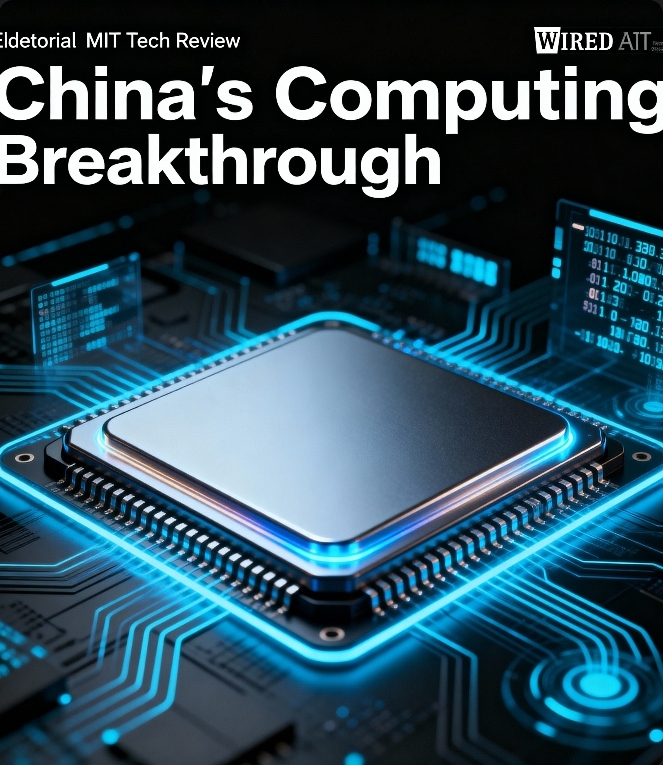
In late 2025, researchers at Peking University in China announced a stunning breakthrough: an analog computing chip that promises to deliver **up to 1,000× the throughput** and **100× the energy efficiency** of today’s most advanced digital processors, including those from Nvidia. The development — published in the journal Nature Electronics — resurrects the notion of analog computing while tackling the “century-old problem” of precision and scalability. :contentReference[oaicite:3]{index=3}

Why Analog Computing Matters Again

Digital computing reigns today because of reliability, precision, and scalability. But as the world pushes deeper into AI, large-scale signal processing (e.g., 6G communications) and massive matrix operations, digital systems hit two big walls:

  • Memory + processor separation (the von Neumann bottleneck) — moving data between memory and compute costs time and power. :contentReference[oaicite:4]{index=4}
  • The energy and throughput limits of digital scaling — billions of AI parameters, teraflops, exaflops — demand new architectures.

Analog computing offers a radically different path: perform computation where data lives (in-memory compute) and exploit continuous physical phenomena (voltages, currents) rather than switching billions of transistors. But historically analog suffered from low precision, drift, noise and lack of scalability.

The Breakthrough: How It Works

The key innovation comes in three parts:

  1. Use of resistive random-access memory (RRAM) crossbar arrays to represent a matrix in conductance form — each cell’s conductance correspond to a matrix element. :contentReference[oaicite:5]{index=5}
  2. An iterative mixed-precision algorithm: a low-precision analog inversion (LP-INV) gives a rough solution; then high-precision analog matrix-vector multiplication (HP-MVM) refines the residual error via bit-slicing. :contentReference[oaicite:6]{index=6}
  3. Block-matrix decomposition and scalable partitioning (BlockAMC) so larger matrices can be processed by multiple arrays. :contentReference[oaicite:7]{index=7}

In their experiment, the team solved a 16 × 16 real-valued matrix to **24-bit fixed-point precision** (comparable to FP32) using 3-bit RRAM devices in a foundry-fabricated chip. :contentReference[oaicite:8]{index=8} They benchmark that their analog system “could offer a 1,000 times higher throughput and 100 times better energy efficiency” compared to state-of-the-art digital processors for the same precision. :contentReference[oaicite:9]{index=9}

Why the 1,000× Number Should Be Viewed Carefully

That “1,000 ×” headline is provocative — but it comes with caveats:

  • The benchmark is for specific matrix-equation solving workloads (e.g., matrix inversion, MIMO signal detection) — not broad AI training or general-purpose GPU workflows. :contentReference[oaicite:10]{index=10}
  • The matrix sizes in demonstration are relatively small (e.g., 16 × 16) and hardware is still a prototype. Scaling to 128 × 128 or larger introduces new physical challenges. :contentReference[oaicite:11]{index=11}
  • The analog system still requires digital peripherals (control, conversion, error correction) — so the total system overhead may reduce some of the gains. Experts on forums note that “idea/prototype and scalable system are very different things.” :contentReference[oaicite:12]{index=12}

Potential Applications

If this technology matures, some of the most compelling applications include:

  • 6G/telecom base-stations & massive MIMO: Real-time signal processing of hundreds or thousands of antennas with ultra-low latency and power. :contentReference[oaicite:13]{index=13}
  • Second-order optimization in AI training: Matrix inversion and Hessian operations could be off-loaded to analog units to accelerate large-model training. :contentReference[oaicite:14]{index=14}
  • Edge inferencing and on-device compute: Low-power analog chips could bring high compute to mobile, IoT, drones — reducing dependency on the cloud. :contentReference[oaicite:15]{index=15}

Strategic & Geopolitical Implications

This advance is not just technical — it has strategic resonance:

China’s push into analog computing underscores the nation’s broader aim of **compute sovereignty** — reducing reliance on Western-supplied GPUs (subject to export controls) and stepping into next-gen computing paradigms. The timing is critical given global tensions over AI hardware.

For established GPU vendors, the rise of analog alternatives means a possible paradigm disruption: If proven at scale, analog chips could complement or even replace GPUs in certain high-throughput, linear-algebra-intensive sectors. This shifts the competitive map in AI hardware.

Challenges That Still Loom

Despite the promise, several major engineering and ecosystem hurdles remain:

  • Device uniformity & yield: RRAM cells must perform reliably across millions of devices and maintain uniform behavior over time and temperature.
  • Noise, drift & thermal stability: Analog circuits are sensitive to environmental changes — maintaining precision at scale is tricky.
  • Interconnect, parasitic effects & scaling: As arrays grow, wiring resistance/capacitance, cross-talk and current-leak paths worsen analog precision.
  • Software/hardware integration: Existing AI frameworks are built for digital GPUs/TPUs — analog accelerators will need new toolchains, compilers and mapping flows.
  • Commercialization & cost: Moving from foundry prototype to mass-production with high yield and acceptable cost will take time.

Conclusion

The analog-computing chip developed by Peking University is a bold milestone: it challenges decades of assumptions about analog precision, showing that physical computing architectures can approach digital fidelity while delivering massive throughput and energy gains. Whether this translates into commercial reality and broad adoption remains uncertain — but the signal is loud: a new computing paradigm may be emerging. For those tracking AI hardware, this breakthrough warrants serious attention.

Disclaimer

The information in this article is for educational and informational purposes only. It reflects research reported in a peer-reviewed journal and commentary from publicly available sources. It is not financial, investment or legal advice. Performance claims (such as “1,000× faster”) are based on specific laboratory benchmarks and may not reflect general-purpose usage or commercial products.

FAQ – Frequently Asked Questions

Q: Does this analog chip replace Nvidia GPUs for AI training?

A: Not yet. The demonstration is for matrix-equation solving tasks; general-purpose AI training workflows (with convolution, attention, large transformer stacks) remain in the digital domain. Scaling and software integration are still under development.

Q: Is analog computing brand new?

A: No — analog computing has existed for decades (even before digital). What’s new is the ability to achieve high precision and scalability that rivals digital systems, which many believed was impossible for analog. :contentReference[oaicite:16]{index=16}

Q: Will this chip appear in consumer devices soon?

A: Probably not immediately. Commercialization of novel architectures typically takes several years (5–10+) from prototype to volume production, especially given ecosystem, manufacturing, toolchain, and reliability demands.


Monday, October 27, 2025

X-BAT: How AI is Reshaping the Future of Military Power on Land, Sea, and Air

X-BAT: How AI is Reshaping the Future of Military Power on Land, Sea, and Air

X-BAT Fighter Jet - AI in Combat
TL;DR: Shield AI’s X-BAT isn’t just a fighter jet — it’s an AI-powered autonomous VTOL aircraft reshaping how nations fight and defend across land, sea, and air. Powered by Hivemind AI, it redefines the limits of unmanned warfare.

1. The Evolution of the AI Battlefield

Artificial Intelligence is no longer confined to offices or labs — it’s on the battlefield. From predictive targeting to autonomous drones, AI is now central to how modern warfare is planned and executed. The “future of work” has shifted from the factory floor to the frontlines, where machine learning systems execute split-second decisions once made by humans.

2. Meet X-BAT: The Autonomous Fighter Jet of the Future

The X-BAT by Shield AI is more than a concept. It’s a next-generation, vertical takeoff and landing (VTOL) fighter designed to operate without runways or direct pilot control. Guided by Hivemind AI, the X-BAT can plan missions, engage targets, and adapt to threats autonomously — all while coordinating with other air and ground systems.

3. AI’s Role Across Land, Sea, and Air

Defense AI isn’t limited to the sky. The same principles behind the X-BAT’s autonomy are reshaping naval fleets, ground robots, and logistics. From AI-assisted submarines to autonomous armored vehicles, defense networks are becoming a mesh of intelligent agents communicating in real time.

4. The Future of Work — Military Edition

In this era, “future of work” means soldiers and AI sharing missions. Humans provide strategy, while autonomous systems handle speed and precision. This human-AI collaboration transforms both military and civilian applications — from disaster response to planetary exploration.

5. Challenges and Ethics of Autonomous Warfare

Autonomous combat raises urgent ethical debates: Who’s responsible if an AI makes a wrong decision? Can machines truly follow human rules of engagement? Governments and companies are now racing to create frameworks that balance innovation with accountability.

Conclusion

The X-BAT is a glimpse into the next decade of defense evolution — a synthesis of AI, autonomy, and aerospace engineering. As warfare shifts from human reflexes to algorithmic precision, one thing becomes clear: the nations that master AI-first defense will define the balance of power in the 21st century.

FAQ

  • What makes the X-BAT different from regular fighter jets?
    It merges VTOL flight, autonomous decision-making, and long-range endurance — bridging drones and fighter jets.
  • Who built the X-BAT?
    It’s developed by Shield AI, the company behind Hivemind AI mission autonomy software.
  • When will it be operational?
    Flight testing is expected by 2026, marking a major step toward deployable AI aviation.
  • How does AI improve battlefield efficiency?
    By handling data-heavy coordination, threat assessment, and mission routing faster than human systems can react.
© 2025 Elite Hustle Vault Central. All rights reserved.

Tuesday, October 14, 2025

Cisco’s New AI Data Center Chip Explained: How It Connects Massive GPU Clusters
Glowing AI chip connecting two data center racks

Cisco’s New AI Data Center Chip Explained

How it connects massive GPU clusters for modern AI
By ROYALRDGpowerElite Hustle Vault Central AI Infrastructure Networking Cisco

TL;DR: Cisco’s chip is the network brain of data centers — connecting GPUs for AI training and inference at scale.

What This Chip Is (and Isn’t)

It’s the backbone of AI clusters. Cisco’s silicon doesn’t perform AI computation — it routes, manages, and optimizes traffic between GPUs to keep training pipelines flowing at full speed.

Why AI Needs Extreme Networking

  • Throughput: Terabit-scale data transfer per link.
  • Latency: Nanosecond switching for synchronized GPU ops.
  • Loss Control: Advanced queuing and telemetry.
  • Scale: Supports tens of thousands of nodes efficiently.
  • Energy: Lower network power per training cycle.

Conclusion

Cisco’s new chip defines how AI data centers communicate. It’s not the AI itself — it’s the nervous system that keeps massive models alive and learning efficiently.

Subscribe to Elite Hustle Vault Central

Get insights on AI infrastructure and digital growth straight to your inbox:

Disclaimer: Informational analysis by ROYALRDGpower for Elite Hustle Vault Central. All trademarks belong to their owners.

© Elite Hustle Vault Central — Author: ROYALRDGpower

Monday, October 13, 2025

HTML Charlotte: The Australian Robot That 3D-Prints a 2,150-sq-ft Home in One Day
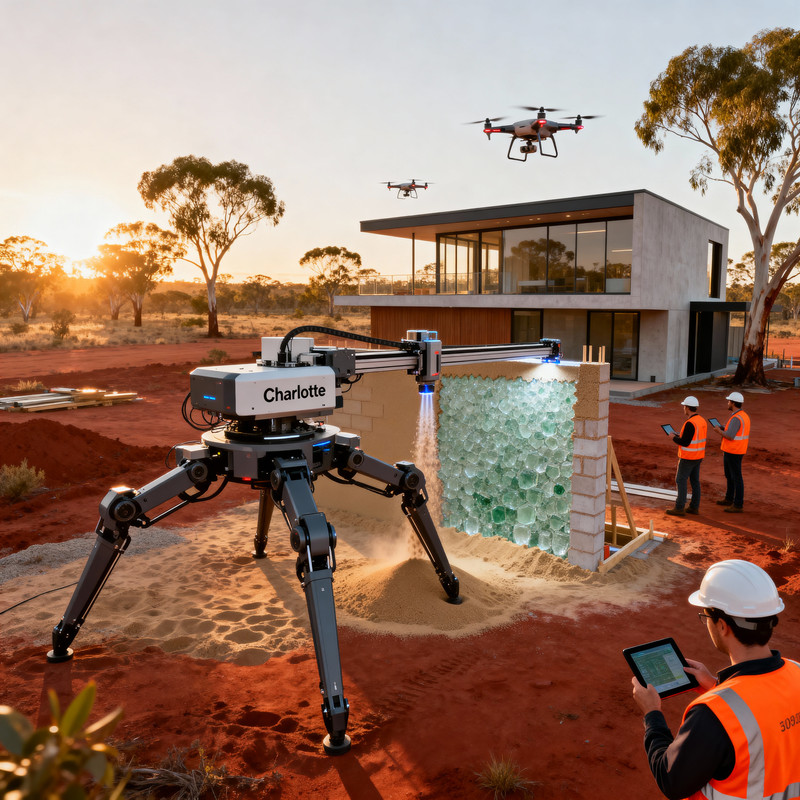
Charlotte construction robot 3D-printing a sustainable home in Australia

Charlotte: The Australian Robot That 3D-Prints a 2,150-sq-ft Home in One Day

By RORALRDApower · Updated Oct 2025 · 6–8 min read

Disclaimer: This article summarizes publicly available information for educational purposes. Performance claims and timelines may change as prototypes evolve. This is not engineering, legal, or financial advice.

What Is Charlotte?

Charlotte is an Australian-built construction robot that can 3D-print the wall system for a full-size home—about 2,150 sq ft—in roughly 24 hours. Instead of traditional formwork, the robot extrudes a printable mix to build structural walls layer by layer with high repeatability.

How the Robot 3D-Prints a House

1) Mobile precision platform

Charlotte uses a multi-leg chassis and a stabilized extrusion head guided by a digital toolpath. The motion system maintains constant nozzle height so layers bond accurately.

2) Sustainable mixes

Printable materials can include sand, crushed brick, recycled glass, and a binder tuned for strength and cure time—cutting virgin cement use and embodied carbon.

3) Hybrid hand-offs

After walls are printed, crews (or partner robots) complete MEP work—electrical, plumbing, roof, windows/doors, insulation, and finishes.

Why It Matters: Speed, Cost, Sustainability

  • Speed: Walls in ~24 hours compress schedules from weeks to days.
  • Cost control: Automation reduces repetitive labor and weather rework.
  • Greener builds: Recycled aggregates and less formwork cut waste and emissions.
  • Design freedom: Curves and thermal cavities are easier with toolpaths than with timber or concrete forms.

Limits & Open Questions

  • Codes & certification: Approvals depend on local standards and testing.
  • Whole-home timeline: “One day” refers to printed walls; services/roof/finishes add time.
  • Envelope performance: Insulation, moisture, and acoustics must meet climate/code.

Impact on Jobs & the Future of Work

Robotic printing reshapes jobs rather than erasing them: site scanning, toolpath setup, materials tech, QA/QC, drone verification, and safety supervision. Training shifts toward digital surveying, robotics operations, and building-science literacy—raising productivity and safety while tackling housing backlogs.

Conclusion

Charlotte signals a construction model that’s faster, cleaner, and more precise. The headline is speed; the long-term win is a smarter jobsite and new skilled roles at the intersection of robotics and building science. If pilots scale to certified production, Charlotte-style systems could help address affordability and climate goals at the same time.

FAQ

Can Charlotte really print a full home in one day?

Charlotte can print the walls for a ~2,150-sq-ft layout in about 24 hours under ideal conditions. Roofing, utilities, and finishes still add time.

What materials does the robot use?

The printable mix includes sand and recycled aggregates (crushed brick, recycled glass) with a binder formulated for strength and curing time.

Is it code-compliant and safe?

Compliance varies by region. Pilot homes undergo third-party testing and standard inspections as the technology moves toward broader certification.

Connect with RORALRDApower

Collaborate, share insights, or reach the team directly.

Wednesday, October 8, 2025

The Impact of AI on the Future of Work

Exclusive: This article is part of our AI Security & Privacy Knowledge Hub , the central vault for elite analysis on AI security risks and data breaches.

Impact of AI on the Future of Work

The Impact of AI on the Future of Work

By ROYALRDGpower · Updated Oct 2025 · 8–10 min read

Labels: Future of Work, AI, Digital Transformation, HR Trends, Leadership

Disclaimer: Insights in this article are for educational purposes and general guidance. They are not legal, financial, or HR advice. Always evaluate AI tools against your organization’s policies, compliance requirements, and local regulations.

Introduction

The world is no longer waiting for the future — it’s unfolding at the speed of code. Artificial Intelligence has moved from buzzword to backbone, quietly restructuring how industries operate, how leaders lead, and how people build careers. This transformation isn’t about machines replacing people; it’s about people evolving alongside the machines they’ve created.

How AI Is Transforming Work Today

1) Automation: The Silent Shift

AI accelerates routine work across sectors — from finance and logistics to creative production. Routine tasks decline while demand rises for interpretation, coordination, and creative problem-solving. The task is not to “save jobs” but to upgrade roles.

2) AI as the New Teammate

Treat AI as a capable colleague: triaging customer queries, summarizing meetings, forecasting risks, and augmenting decisions. Humans keep the context, ethics, and empathy; AI carries the repetition.

3) The Data Revolution

Every interaction produces data. Organizations that collect, govern, and interpret it responsibly win. New roles — data analysts, prompt engineers, AI ethicists — bridge raw machine logic and real outcomes.

The Skills That Will Define the Future Workforce

Degrees prove what you knew. Adaptability proves what you’ll become. Eight pillars matter most:

  • Digital literacy — understand tools, data flows, and automation basics.
  • Critical thinking — frame questions, test assumptions, synthesize insight.
  • Creativity & innovation — design, storytelling, experimentation.
  • Emotional intelligence — empathy, conflict navigation, trust-building.
  • Adaptability & agility — pivot between tools, roles, and contexts.
  • Cross-cultural collaboration — work fluently across time zones and norms.
  • Data awareness — read metrics, question bias, act on evidence.
  • Lifelong learning mindset — treat learning as a lifestyle.

Building the Hybrid Workforce: Leadership Strategies for an AI-Driven Era

1) From Control to Empowerment

Shift from supervision to enablement. Use AI to surface insights, not to micromanage. Autonomy + alignment beats oversight.

2) Ethical & Transparent Decisions

Adopt clear policies for data use, model bias testing, and explainability. Ethics is not a blocker; it’s a brand moat.

3) Redefining Collaboration

Standardize collaboration stacks (docs, whiteboards, chat, async video). Make inclusion the default: every voice, device, and timezone considered.

4) Leading Continuous Learning

Build a learning ecosystem: micro-courses, internal academies, AI-assisted practice, and pathways from role to role.

5) Emotional Leadership

Protect meaning, belonging, and wellbeing. Burnout is invisible in hybrid teams — leaders must look for it deliberately.

The Challenges Ahead

  • Displacement risk: reskill programs must precede automation, not follow it.
  • Bias & privacy: audit models and minimize sensitive data.
  • Inequality: invest in access — devices, bandwidth, and training.
  • Compliance: align with labor, IP, and emerging AI regulations.

Conclusion & Next Steps

AI won’t steal your job — but someone using AI might. The winners will be those who combine human strengths — curiosity, compassion, conscience — with intelligent systems. Start small: pick one workflow to automate, one team ritual to improve, and one learning path to begin this week.

Connect with ROYALRDGpower

Collaborate, share insights, or stay updated on AI transformation and digital leadership initiatives.

FAQ

What is the impact of AI on the future of work?

AI automates routine tasks, augments decisions, and creates new roles focused on analysis, design, and human interaction.

Which skills matter most?

Critical thinking, creativity, emotional intelligence, digital literacy, and a lifelong learning mindset.

How should leaders prepare?

Adopt ethical AI policies, invest in reskilling, standardize collaboration tools, and empower teams with autonomy.

Monday, September 22, 2025

“AI in Healthcare 2025”

!DOCTYPE html> AI in Healthcare 2025: Opportunities, Challenges, and The Future Ahead

AI in Healthcare 2025: Opportunities, Challenges, and The Future Ahead

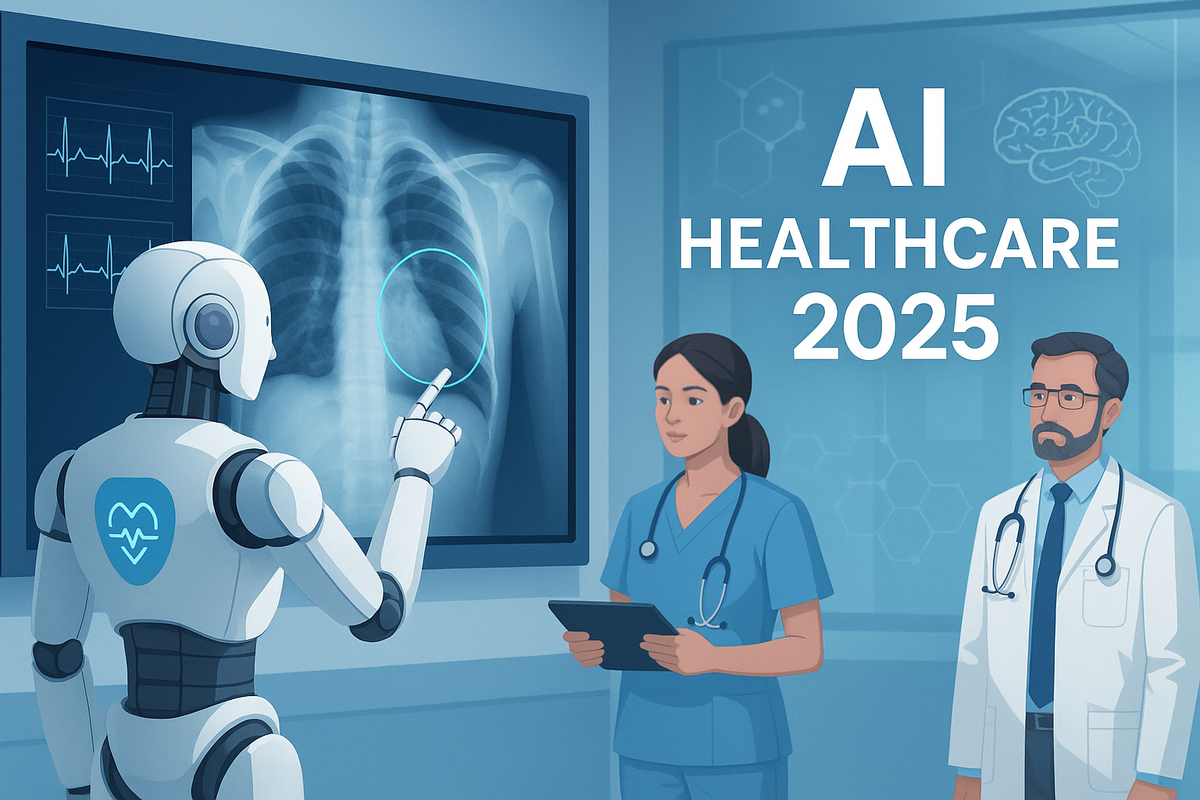
AI in Healthcare 2025 illustration

Introduction: Why AI in Healthcare 2025 Matters

Artificial Intelligence (AI) is no longer a futuristic dream—it’s already reshaping healthcare systems across the globe. In 2025, AI in Healthcare is being used for early disease detection, predictive analytics, administrative efficiency, and personalized patient care. But alongside opportunities, significant gaps remain. To fully unlock AI’s potential, healthcare providers must address staff training, data security, and ethical concerns.

How AI is Transforming Healthcare

  • Diagnostics: AI-powered imaging tools detect cancer, heart disease, and neurological conditions faster than humans.
  • Predictive Analytics: Hospitals use AI to predict patient readmissions, manage ICU capacity, and forecast disease outbreaks.
  • Personalized Medicine: Machine learning tailors treatment plans based on genetic, lifestyle, and historical data.
  • Administrative Efficiency: AI automates billing, clinical documentation, and appointment scheduling.

The Missing Links: Where Healthcare Still Lacks

1. Staff Training & AI Literacy

One of the biggest gaps in adopting AI is the lack of staff readiness. Doctors, nurses, and administrators often don’t receive adequate training to use AI-powered tools effectively. Without training, they risk mistrust, underuse, or errors in AI implementation.

2. Ethical & Legal Challenges

AI introduces concerns around patient privacy, algorithm bias, and accountability. Who is responsible if an AI misdiagnoses a patient—the developer or the doctor?

3. Data Quality & Infrastructure

Many hospitals still struggle with fragmented, outdated, or biased data. AI relies on high-quality, representative datasets to make accurate predictions.

4. Integration Issues

Legacy healthcare systems are not always compatible with modern AI tools, making integration expensive and complex.

Bridging the Gaps: What Needs to Be Done

  • Comprehensive Training: Hospitals must invest in ongoing AI training programs for medical staff to build confidence and competence.
  • Clear Regulations: Governments should establish guidelines around AI use in patient care, liability, and data ethics.
  • Improved Data Management: Healthcare systems must standardize and clean patient data for reliable AI usage.
  • Collaborative Culture: IT specialists, clinicians, and policymakers should collaborate to ensure smooth AI integration.

FAQs: AI in Healthcare 2025

1. Will AI replace doctors in 2025?

No, AI is not here to replace doctors but to support them. AI can handle repetitive tasks, while doctors focus on critical thinking and patient care.

2. How does AI improve patient care?

AI enhances accuracy in diagnostics, offers personalized treatments, and reduces waiting times through predictive scheduling.

3. Is patient data safe with AI?

Data security remains a challenge. Hospitals must adopt strict cybersecurity measures and comply with regulations like HIPAA and GDPR.

4. What jobs in healthcare are most affected by AI?

Administrative roles face the highest automation, but AI also assists radiologists, pathologists, and pharmacists in their daily work.

5. How should hospitals prepare staff for AI adoption?

Regular AI workshops, cross-functional training, and real-time simulations help staff build trust and competence with AI tools.

6. What is the future of AI in Healthcare?

By 2030, AI will be deeply integrated into preventive care, mental health support, and robotic-assisted surgeries.

Conclusion

AI in Healthcare 2025 presents immense opportunities but also demands responsibility. For hospitals, success will depend on balancing innovation with ethics, investing in staff training, and strengthening infrastructure. Those who adapt early will not only reduce costs but also deliver safer, faster, and more personalized patient care.

Disclaimer

This article is for informational purposes only and does not provide medical, financial, or legal advice. Always consult qualified professionals before implementing AI technologies in healthcare settings.

Connect with ROYALRDGpower

Collaborate, share insights, or stay updated on AI transformation and digital leadership initiatives.

© 2025 Elite Hustle Vault Central | Author: ROYALRDGpower

Elite Hustle Vault Central Logo

Friday, September 19, 2025

Best AI Models and Companies at the End of 2025: The Ethical SEO Guide


Best AI Models and Companies at the End of 2025: The Ethical SEO Guide

Introduction

Artificial Intelligence (AI) has reshaped the way we live, work, and communicate. By the end of 2025, several companies stand out as leaders in AI development. From OpenAI’s GPT-5 to Google’s Gemini 2.5 and Anthropic’s Claude 4, each company is contributing unique innovations.

This ethical blog post provides a balanced, SEO-friendly, and human-centered overview of the best AI models and companies at the end of 2025, while also addressing the ethical implications for businesses, developers, and society.


Why AI Models Matter in 2025

  • Automating tasks across industries

  • Supporting businesses in decision-making

  • Improving healthcare and education

  • Enhancing creativity and productivity

  • Providing tools for responsible and ethical AI usage


Top AI Models and Companies in 2025

OpenAI – GPT-5

  • Multimodal (text, image, code, audio)

  • Deep reasoning ability

  • Widely integrated into Microsoft and enterprise tools

Google DeepMind – Gemini 2.5

  • Strong at combining text, images, and reasoning

  • Embedded across Google Workspace and Android

  • Ideal for research and business intelligence

Anthropic – Claude 4 (Opus, Sonnet, Haiku)

  • Designed with ethical alignment at its core

  • Preferred in healthcare, legal, and finance sectors

  • Trusted for reduced bias and safe responses

Mistral AI – Open Source Leadership

  • Affordable and open-source models

  • Developer-friendly with lightweight, powerful tools

  • Driving accessibility in AI innovation

Moonshot AI – Kimi & Kimi-K2

  • Long-context reasoning (handles huge documents)

  • Affordable access for students and enterprises

  • Expanding fast across global markets


Ethical Considerations of AI Adoption

When choosing an AI model in 2025, businesses should consider:

  • Transparency: Does the AI explain its reasoning?

  • Bias and fairness: Are outputs neutral and inclusive?

  • Data privacy: Is sensitive information protected?

  • Accessibility: Are tools affordable and inclusive?

  • Sustainability: Does AI reduce or increase environmental impact?


Best AI Model by Category

  • Maximum performance: OpenAI GPT-5

  • Multimodal integration: Google Gemini 2.5

  • Safety and compliance: Anthropic Claude 4

  • Cost-effective open model: Mistral AI

  • Long-context reasoning: Moonshot AI (Kimi-K2)

  • Open-source research: Meta (LLaMA 4)


Conclusion

The best AI model of 2025 is not about one company dominating, but about finding the right fit for your needs.

  • For performance → GPT-5

  • For integration → Gemini 2.5

  • For trust and ethics → Claude 4

  • For developers and startups → Mistral or Moonshot

AI is powerful, but it must be used ethically, transparently, and responsibly.

Disclaimer

This article is for informational and educational purposes only. It does not constitute financial, legal, or medical advice. Always evaluate AI tools carefully before implementing them in sensitive industries.


❓ Frequently Asked Questions

Which is the best AI model in 2025?
The best AI model depends on use case: OpenAI GPT-5 for performance, Google Gemini 2.5 for multimodal tasks, Claude 4 for ethics, Mistral AI for cost efficiency, and Moonshot AI for long-context reasoning.

Is GPT-5 better than Gemini 2.5?
GPT-5 is stronger in reasoning + integrations, while Gemini 2.5 shines in multimodal tasks. Best depends on your industry need.

Which AI company focuses most on ethics?
Anthropic’s Claude 4 is considered the most ethical and transparent model in 2025.

What open-source AI models are available?
Mistral AI and Meta’s LLaMA 4 are the top open-source models for developers and startups.

📩 Subscribe to Our Newsletter

Stay updated with the latest AI trends, tools, and guides.

OpenAI o3 Outlook 2026